How to Grow an Instagram Account: A Guide to Gaining Followers From Zero
This guide recommends building an Instagram account on a clear topic, a strong profile, regular content, Reels and engagement. Algorithm signals, a content plan, business account tips and where buying followers stands under Instagram’s rules.
 Sefa AşkınSocial Media Specialist18 min read
In Brief
To grow an Instagram account, you first define a clear topic and target audience, improve the profile (name, bio, image, link), create content that delivers value on a regular basis, and use Reels, posts and stories together. According to Instagram, ranking signals include watch time, engagement, relationship history and interests. Instagram says not to use apps that offer likes and followers; accounts that use them may have some features restricted or may be disabled or terminated.
- This guide recommends building growth on consistent content that offers a specific audience clear value; it treats follower count as a result, not a goal.
- According to Instagram, most of what people see in Reels comes from accounts they don’t follow, while stories come from accounts they follow; you can plan your content formats around that difference.
- The Instagram Help Center says that apps offering likes and followers should not be used; accounts that use them may have some features restricted or may be disabled or terminated.
Table of Contents
Opening an Instagram account takes a few minutes, but for that account to reach new people regularly, get followed and generate commercial value takes time and strategy. That is why the question “how do you grow an Instagram account” concerns individual creators and businesses alike. This guide offers a working framework that recommends producing value consistently over shortcuts; the recommendations are Media Fish’s framework, not Instagram’s rule or a measured result. Instagram’s own statements are cited with links where relevant.
In this article we walk through how to grow an Instagram account from scratch step by step: the foundation of growth, account type, profile optimization, content strategy, Reels and other formats, discoverability, how the algorithm works, posting rhythm, engagement, measurement, the risks of buying followers, tips for business accounts, and common mistakes. Platform features and the algorithm change often, so follow the current features through Instagram’s official sources.
What is the foundation of account growth?
The working framework of this guide is this: Build the account around offering a specific audience clear value. Someone thinking of following an account might ask: “What will this account give me?” Information, inspiration, entertainment, utility, community or product: If you can briefly say what your account offers, you can build your content plan around that sentence. Choosing a specific topic and a specific audience gives you a yardstick when deciding on content.
Follower count alone is not a measure of success; this guide treats it as a result, not the goal itself. That is why we suggest thinking of your growth goal not as a “number” but as “regular engagement with the right audience.”
Account type: Personal or professional?
In addition to personal accounts, Instagram has a professional account option (business or creator). According to the Instagram Help Center, professional accounts are set up as Business or Creator; a professional account has a professional dashboard, the ability to run ads, a Contact button shown at the top of the profile (you can add directions, a phone number and an email) and insights that show information such as who your followers are and when they are online. Professional accounts cannot be set to private (Instagram Help Center, professional accounts). According to the same source, you can switch back to a personal account or change your professional account type at any time. Instagram says that accessing insights requires a public (personal or professional) account (Instagram Help Center, account and content insights). If you want to measure growth, we suggest looking at these tools; options may be updated over time.
Define your goal and target audience
Before you start creating content, answer three questions: Who do I want to reach? What value do I offer them? What do I ultimately want from my account (sales, bookings, awareness, community)? These answers determine the topic, language and format of your content. To get to know your target audience better, you can use our target audience and competitor analysis guide. Study similar accounts: Which content gets a lot of engagement, which topics are untouched and where can you be different?
Optimizing your profile
Your profile is your storefront. When someone who has seen one of your posts lands on your profile, these are the first areas they see; this guide’s recommendation is that all of them state the account’s topic clearly:
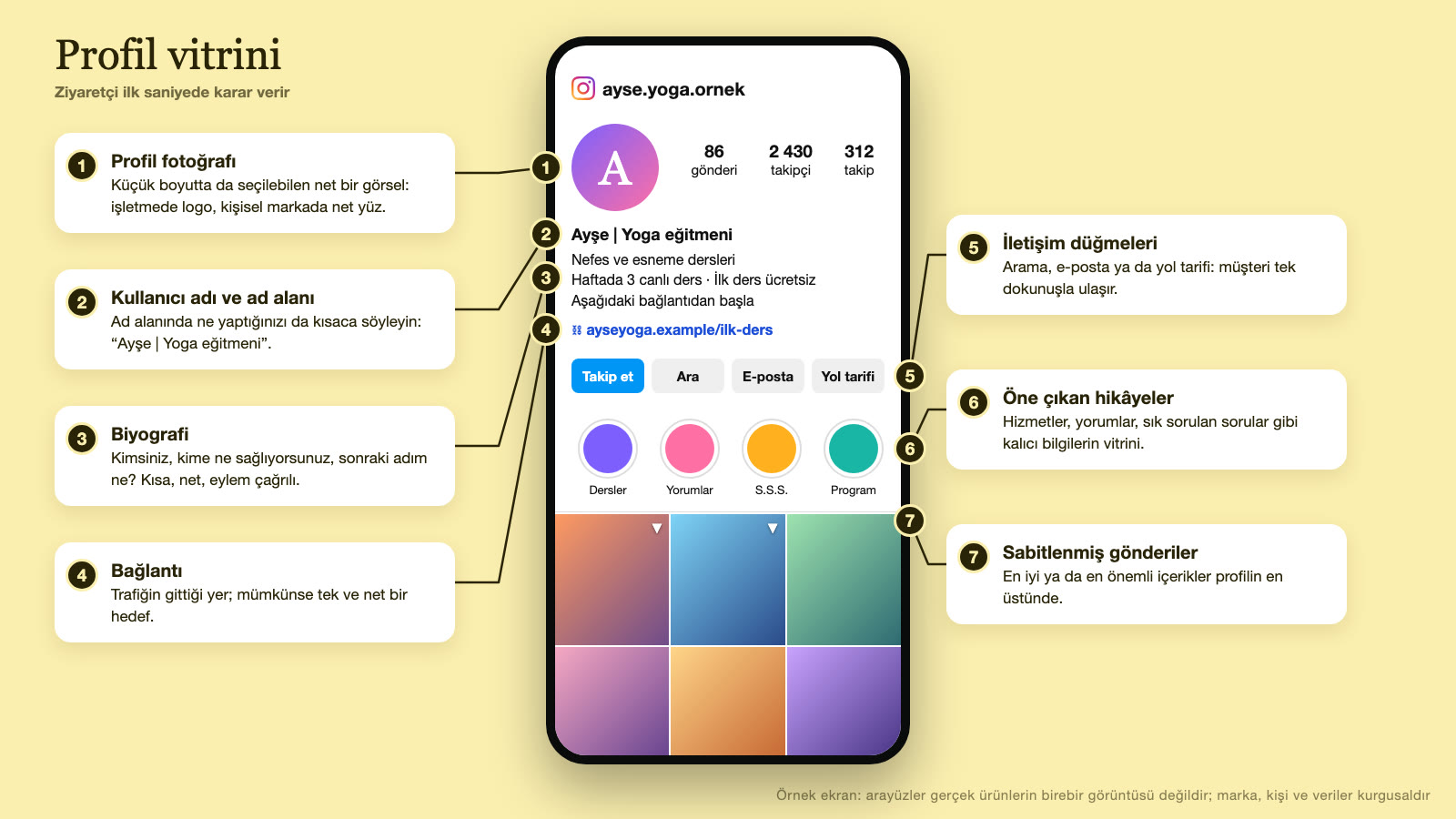
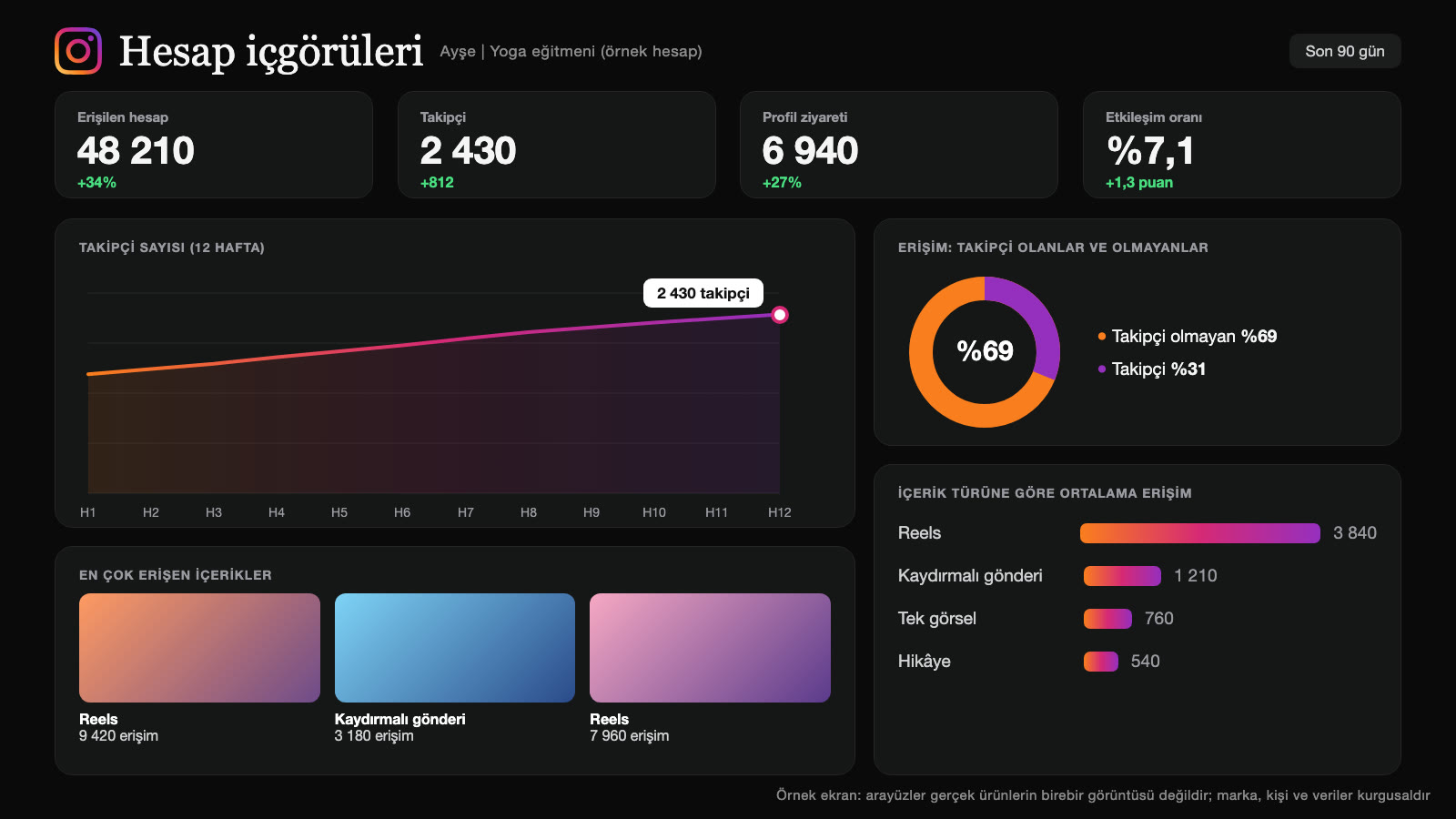
- Username and name field: Keep the username short, memorable and easy to type. According to Instagram’s 2021 explanation of search, search matches the text you type against usernames, bios, captions, hashtags and places, and using a username or profile name related to your content is recommended (Instagram, how search works, August 25, 2021). So in the name field you can add a phrase that says what you do next to your brand name (for example “Ayşe | Yoga instructor”).
- Profile photo: Recommendation: a clear image that is recognizable even at a small size; a logo for businesses, a clear face photo for personal brands. For a logo that works at small sizes, see our logo design guide.
- Bio: Who are you, what do you provide and to whom, what is the reason to follow, and what is the next step? We recommend keeping it short, clear and action-oriented. Instagram’s search explanation recommends adding keywords that describe the account’s scope to the bio (and location for local accounts).
- Link: You can use the link in your bio to direct people to your website or booking page; we recommend giving a single, clear destination where possible.
- Highlights: According to the Instagram Help Center, stories added to Highlights stay on your profile after the original story disappears, until you remove them (Instagram Help Center, Highlights). You can collect lasting information here such as services, reviews, frequently asked questions, products and the team.
- Contact button: On professional accounts, directions, a phone number and an email address can be added to the Contact button shown at the top of the profile (professional accounts page, link above).
- Pinned posts: Instagram offers a feature to pin a post to the top of the profile (Instagram Help Center, pinning a post to your profile); you can use it for your most important content.
- Visual consistency: We recommend keeping color, typeface and photo style consistent. Use corporate identity principles for this consistency.
Content strategy: What should you post?
Content is the heart of a growth strategy. Instead of posting at random, build a framework:
Content pillars
As a recommendation, you can build your account on three or four main content pillars (this number is a choice, not a sourced rule). For example, for a cafe the pillars could be product and menu showcases, preparation and behind the scenes, customer stories and community events, and coffee knowledge and tips. You can give each pillar a purpose (for example information, trust, sales); this is a planning example, not a measured result. The pillars give you a framework when deciding what to post.
Content formats
- Reels (short video): According to Instagram, most of what people see in Reels comes from accounts they don’t follow (Instagram, ranking explanation), so it can be used to reach a new audience. Our recommendation is to state the topic clearly at the opening and offer a short benefit or emotion. For shooting and editing details, see our Reels shooting guide.
- Carousel posts: Posts with multiple images that walk through steps or present a list suit informational content.
- Single-image post: For a strong photo, a quote or an announcement.
- Stories: According to Instagram, what you see in stories comes from people you choose to follow and from ads, so they suit communicating with existing followers. Instagram’s sticker list includes polls, emoji sliders, questions, quizzes and countdowns (Instagram Help Center, stickers).
- Live: Can be used for real-time Q&A and events.
- Collaboration (collab) posts: Posts created together with other accounts, called “collab posts” in the Instagram Help Center (Instagram Help Center, collab posts).
Recommendation: Instead of trying to do everything at once, produce regularly in two or three formats and develop what works through measurement.
How do you make content creation sustainable?
Regular production is this guide’s core recommendation; to build a sustainable routine instead of posting heavily for a few weeks and stopping:
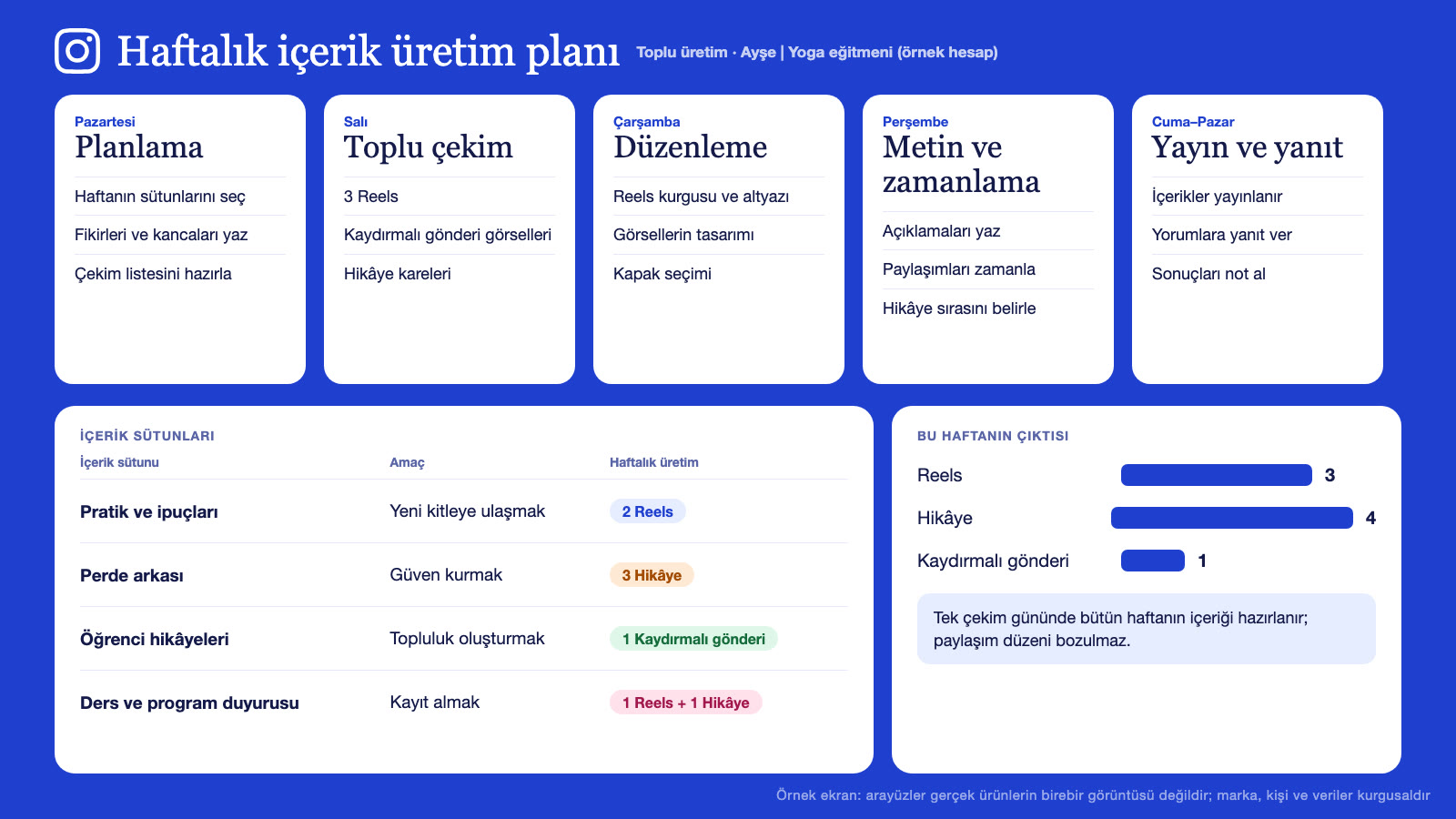
- Prepare a content calendar: Make a weekly or monthly plan; note which pillar each day’s content will come from and in which format. For details, see the calendar section in our social media management guide.
- Batch produce: Shoot and edit several pieces in one day and queue them by posting day.
- Repurpose content: Turn one idea into a Reel, a carousel post, a story and text.
- Keep an idea bank: Customer questions, comments, industry news and competitor accounts are sources of ideas.
- Maintain quality: Aim for good light, a clear image and clean sound. For product shooting, our product photography guide can help.
- Set a realistic pace: Choose a pace you can sustain; this is a recommendation.
AI tools can save time on idea generation, headline drafts and caption writing, but have a person check the brand’s voice and the accuracy of the content (for details, see our article on AI content production).
Using stories effectively
According to Instagram, stories come from accounts you follow (ranking explanation, link above); this guide treats stories as a space for communicating with existing followers. Recommendations for using stories:
- Tell it as a series: Instead of a single story, build a narrative of three to five frames with a beginning and an end (for example, how a product is made).
- Use engagement tools: Polls, questions, emoji sliders and quiz stickers (sticker list) are ways to get responses from followers.
- Be natural and quick: Our recommendation is to share real, in-the-moment content in stories rather than looking for perfect production.
- Give a clear call to action: Add a link sticker, a call to message or a “see the post” pointer.
- Highlight: Add stories with lasting value (services, frequently asked questions, client references) to your Highlights.
Turning profile visitors into followers
Even if a post reaches many people, there is no certainty that a person who lands on your profile will tap the follow button. Ways you can try to turn a visitor into a follower: Write the bio around the question “what are you promising?”; make sure your first posts clearly explain the account’s topic; use Highlights to show the account’s scope; pin your best content; give a reason to follow the account in post captions and at the end of Reels (for example, “follow for the next part of this series”). Creating a series or a promise worth following is one of these recommendations.
Live streams, collaborations and community events
Live streams can be used for Q&A, product introductions, expert talks or behind-the-scenes showings. Announcing the stream in advance and choosing a specific topic is a recommendation. For collaborations, you could consider a collab post, live stream or giveaway with accounts that speak to the same target audience but are not competitors. When running giveaways and campaigns, make sure you follow the platform’s rules and the relevant legislation; state the entry conditions clearly and avoid misleading methods such as buying followers. For broader collaboration models, see our influencer marketing guide.
Account security and sustainability
To avoid losing your account, we recommend taking basic security measures: Use a strong and unique password and turn on two-step verification (called two-factor authentication on Instagram); according to the Instagram Help Center, two-factor authentication asks for a code when a login is attempted from a device Instagram doesn’t recognize (Instagram Help Center, two-factor authentication). Don’t click suspicious links or fake messages such as “your account will be closed,” and give access to your account only to third-party apps that you trust and that are necessary. If more than one person manages the account, limit permissions and remove access for departing staff. Also, don’t tie content production to one person; a content routine and a backup plan ensure the account’s continuity.
How does the Instagram algorithm work?
According to Instagram, each part of the app uses its own algorithm; there is no single algorithm. The signals in Instagram’s ranking explanation and their counterparts in the source are:
- Watch time: Instagram says it predicts the likelihood of spending a few seconds on a post in the feed, and of watching a video to the end in Reels.
- Engagement: Instagram says the posts you like, share, save or comment on help it understand your interests. Adam Mosseri, head of Instagram, said on January 22, 2025 that the three most important ranking signals are watch time, likes and sends (sharing a piece of content by message).
- Relationship: Instagram counts your history of interaction with someone as a signal.
- User interest: Instagram says it determines interest based on factors such as the people and content you have recently followed, liked or engaged with.
- Post information: Instagram also counts when a post was shared among the information about the post.
- Recommendation rules: Instagram says it tries not to show a post that violates its recommendation guidelines in the places where it recommends content.
The weights and applications of the signals may change; for the current version, see the page at the link. Our recommendation is to focus on producing content your audience will be interested in and watch to the end, rather than looking for a “secret formula.”
Discoverability: How do new people find you?
- Reels and Explore: According to Instagram, most of what people see in Reels and Explore comes from accounts they don’t follow. For content aimed at a new audience, we recommend paying attention to the first second and a clear topic. According to the Instagram Help Center, Reels longer than 3 minutes are not recommended to new audiences (Instagram Help Center, recording Reels).
- Keywords: According to Instagram’s 2021 explanation, search matches the text you type against usernames, bios, captions, hashtags and places, and text is the most important signal in search; adding keywords and hashtags to captions is recommended (Instagram, how search works). Naturally state your account’s topic in these fields.
- Hashtags: According to the source above, Instagram search also matches hashtags; we recommend choosing hashtags related to the content’s topic. There is no sourced figure on how many hashtags to use.
- Location tag: According to the source above, Instagram search also matches places; for local businesses, adding a location is therefore an option.
- Collab posts and tagging: Collaborating with other accounts and tagging relevant accounts can raise the chance that people outside your audience see you; this is an assumption, not a measured result.
- Shareable content: According to Mosseri, sends (sharing content by message) are one of the three main ranking signals; you could consider producing content people would want to send to their friends.
- Promotion on other channels: Our recommendation is to announce your account on your website and email newsletter and with in-store cards and QR codes.
Engagement and community
This guide doesn’t see account management as one-way broadcasting; for two-way communication we recommend the following:
- Reply to comments and messages: Set your own response time.
- Ask questions: Use polls, question boxes and guiding questions in captions and stories.
- Comment meaningfully on others’ content: Writing sincere comments that add value on accounts in your industry is one way to build relationships. Avoid bulk and irrelevant comments.
- Make the community visible: Share customer and follower content (with permission) and say thank you.
- Use a real voice instead of canned text: A warm tone that fits your brand.
We cover how to handle negative criticism in comment and community management in our social media management guide.
How often and when should you post?
Searches for “Instagram algorithm hours” come from people wondering about the best posting time. This article doesn’t give a time that applies to everyone; there is no sourced time. According to Instagram, insights show the times your followers are most active on Instagram once you have at least 100 followers (Instagram Help Center, insights). Our recommendation is to try posting at those times and compare the results.
For frequency, the sources this article draws on don’t recommend a number of posts. Our recommendation is to choose a pace you can sustain based on your capacity (for example three or four posts a week; this is only an example) and adjust it based on results in insights.
Measurement and analysis
Manage growth with data, not guesses. On a professional account’s insights screen, look at these metrics:
- Views and viewers: According to Instagram, views are the number of times content is played or shown on screen; viewers are the number of unique accounts that saw the content at least once.
- Interactions: The number of actions such as likes, comments, saves and shares; for posts, stories and live videos, the accounts that engaged are split into followers and non-followers.
- Reels metrics: Views, watch time, average watch time, viewers and the number of accounts that started following you after viewing a Reel (Instagram Help Center, Reels insights).
- Total followers: With at least 100 followers: growth (followers gained or lost), top locations, age range and most active times.
- Story profile actions: Profile visits, follows or website taps that came from the story (Instagram Help Center, story insights).
For the definitions and conditions of the metrics above, see Instagram’s insights page; Instagram notes that some measurements are estimates and still in development.
Each month, compare the best- and worst-performing content: What did they have in common (topic, format, opening line, length)? Repeat what works and drop what doesn’t. To connect social media data with business goals (website traffic, bookings, sales), you could consider using tracking links and codes.
Why is buying followers and using bots wrong?
Buying followers, or methods presented as “follower hacks,” harm your account in the long run:
- Engagement rate: Engagement rate is the ratio of engagements to followers. Accounts that don’t engage with your content raise the follower count but not the engagement count; in that case the rate drops. This is a calculation that follows from the definition, not measured data.
- It violates the rules: The Instagram Help Center says that apps offering likes and followers should not be used, that accounts creating inauthentic activity violate the Community Standards and that accounts that keep using these apps may have some features restricted and the account may be disabled or terminated (Instagram Help Center).
- Security risk: According to the same Instagram page, if you give your login details to these apps by providing an access token or username and password, the apps can gain full access to your account, see your private messages and post spam or harmful content on your profile.
- It doesn’t reflect your audience: There is no basis for expecting an account that is not from your target audience to buy from you; this is an assessment.
Alternatives you can consider: running ads (covered in our Instagram advertising guide), partnering with suitable influencers (our influencer marketing guide), creating collab posts and organizing community events.
How do you grow a business account?
For businesses, the goal on Instagram is not just followers but winning customers. For a business account, pay attention to these points:
- Create content that answers customer questions: How to use the product, how the service works, frequently asked questions and objections.
- Show customer reviews and results: You can share real customer experiences, before-and-after images (with permission) and client references.
- Share behind the scenes: Production, preparation and team content is an option.
- Make a clear call to action: Direct people to the link in the bio or to a message for bookings, orders and quotes.
- Set a response time: Set your own target time for replying to messages and comments.
- If you are a local business, use location: We recommend keeping the location tag, map and business profile details consistent with each other (our Google Business Profile guide).
- Plan organic and ads together: Boost content that performs well with ads.
To connect Instagram to your overall marketing strategy, take a look at our digital marketing guide.
A 30-day starter plan
The plan below is a working framework recommended by Media Fish; the durations and numbers are not a sourced rule or a measured result.
- Week 1, foundation: Define the target audience and content pillars; optimize the profile; study competitor and inspiration accounts; prepare a content bank for the first posts.
- Week 2, regular production: As a sample pace, publish three posts and two Reels a week; share stories; reply to incoming comments.
- Week 3, engagement: Engage meaningfully with accounts in your industry; run a poll or Q&A story; propose a collaboration for a collab post.
- Week 4, analysis: Review the insights; identify the best content; update the second month’s plan accordingly.
For people searching “how to get 1,000 followers,” this plan offers a solid foundation, not a quick miracle. We don’t give a sourced timeline or number for follower growth speed.
Practices to avoid
The list below is Media Fish’s framework of recommendations; only the items on buying followers and non-original content are based on Instagram’s own statements.
- No clear topic: Posting everything and being known for nothing.
- A weak profile: A vague bio, a low-quality profile photo, an account with no link.
- Irregular posting: Weeks of silence, then a burst of posts.
- Only sales messages: Constantly promoting products without giving value.
- Neglecting engagement: Not replying to comments and messages.
- Copying others: Imitation instead of an original voice and value. Instagram explains that when it finds two or more identical pieces of content, it recommends only the original (Instagram for Creators, April 30, 2024).
- Not measuring: Continuing without knowing what works.
- Buying followers or using bots.
- Using hashtags unrelated to the content.
- Giving up too fast: Dropping production without measuring.
Fictional example: A Pilates studio
This example is fictional; it doesn’t describe a real client or a measured result.
A small Pilates studio’s Instagram account mostly shares the class schedule; its follower count is limited and new members mostly come through word of mouth. The studio wants to use the account to reach new members.
Foundation: The target audience is busy working people aged 25–45 who live in neighborhoods near the studio. Value proposition: “A small, effective and safe movement routine for yourself in a busy life.” The profile name and bio are set up accordingly; “first class,” “FAQ,” “member reviews” and “schedule” are added to Highlights.
Content pillars: (1) Short exercise tips (Reels), (2) informational carousel posts (for example “three moves for desk-related back pain”), (3) member stories (with permission), (4) behind the scenes from the studio, instructor introductions, events and announcements.
Growth: Two Reels, two carousel posts and daily stories are published each week. Comments get fast replies, and questions are answered in stories. Collab posts are made with local businesses nearby (a healthy cafe, a physical therapist). The bio link points to a “free trial class” page.
Measurement: In the first two months, they look at which content reached people who don’t follow the account and which brought profile visits and link taps. The “desk exercise” series, which gave the best result, is repeated; posts that only share the class schedule are reduced.
In this scenario, growth comes from a process driven by a clear audience, content that delivers value, regular production, engagement and data.
Instagram growth checklist
- Are the account’s topic and target audience clear?
- Are you using an account type that can see insights (public personal or professional), and are the insights visible?
- Are the username, name, profile photo and bio clear and consistent?
- Is there a clear link and call to action in the bio?
- Have Highlights been organized?
- Have three or four content pillars been defined?
- Is there a weekly content calendar and a batch production routine?
- Are Reels, carousel posts and stories used together?
- Are comments and messages answered within the set time?
- Are hashtags related to the content?
- Are insights reviewed monthly, and is content that works repeated?
- Are you sure you are staying away from methods like buying followers and bots?
If you want to manage your account together with strategy, content production and ads, take a look at our social media services.
Mini glossary: Instagram terms
- Professional account: An account type set up as a business or creator.
- Insights (statistics): The statistics Instagram offers for account and content performance.
- Reels: Short vertical videos.
- Explore: The area that shows users content recommended from accounts they don’t follow.
- Engagement rate: The ratio of engagements to reach or followers.
- Save: A user saving a post to look at later; one of the actions counted in Instagram’s engagement insights.
- Collab post: A post created together with other accounts.
- Organic growth: Followers and reach earned without ads or purchases (as used in this article).
- Alt text: Alternative text describing what an image shows.
Frequently asked questions
How do you grow an Instagram account?
This guide’s recommendation: Define a clear topic and target audience, set up the profile, create content that offers value on a regular basis, try reaching a new audience with Reels, manage engagement and community, and improve the plan by measuring results with Instagram’s insights.
How do you grow an Instagram account from scratch?
First clarify the account’s topic and audience and set up the profile, and then produce content regularly: Try reaching a new audience with Reels, offering value with carousel posts and communicating with followers through stories. Reply to comments, measure and repeat what works (a recommended framework).
How does the Instagram algorithm work?
According to Instagram, each part of the app uses its own algorithm. Its ranking explanation lists signals such as watch time, engagement (likes, shares, saves, comments), the history of interaction between the user and the account, interest, and when the post was shared. According to Mosseri, the three most important signals are watch time, likes and sends (January 2025).
Is buying followers safe?
The Instagram Help Center says not to use apps that offer likes and followers; accounts that use them may have some features restricted or may be disabled or terminated. Giving these apps your login details can put your account’s security at risk. Ads and collaborations can be considered as alternatives.
How many times a week should I post?
The sources this article draws on give no recommended number. We recommend choosing a pace you can sustain (for example three or four posts a week; this is only an example). You can check when your followers are most active in your account’s insights.
How do you grow a business account?
Our recommendation: Create content that answers customer questions, real reviews and behind-the-scenes posts; use a clear call to action in the bio, reply to messages within the time you set, keep the location and business profile consistent if you are a local business, and consider boosting content that performs well with ads.
Conclusion
This guide’s recommendation is to grow the account not with tricks and shortcuts but by producing value regularly. A clear topic and target audience, a tidy profile, planned content pillars, using Reels and other formats together, real engagement, and improvement based on insights are the parts of this framework. Aim not at the follower count but at the relationship you build with your audience.
This article was prepared with AI support. The images in the article are sample screens drawn with code; they don’t show a real client, person, place or data.
Related work
A few examples of Media Fish’s work on this topic:
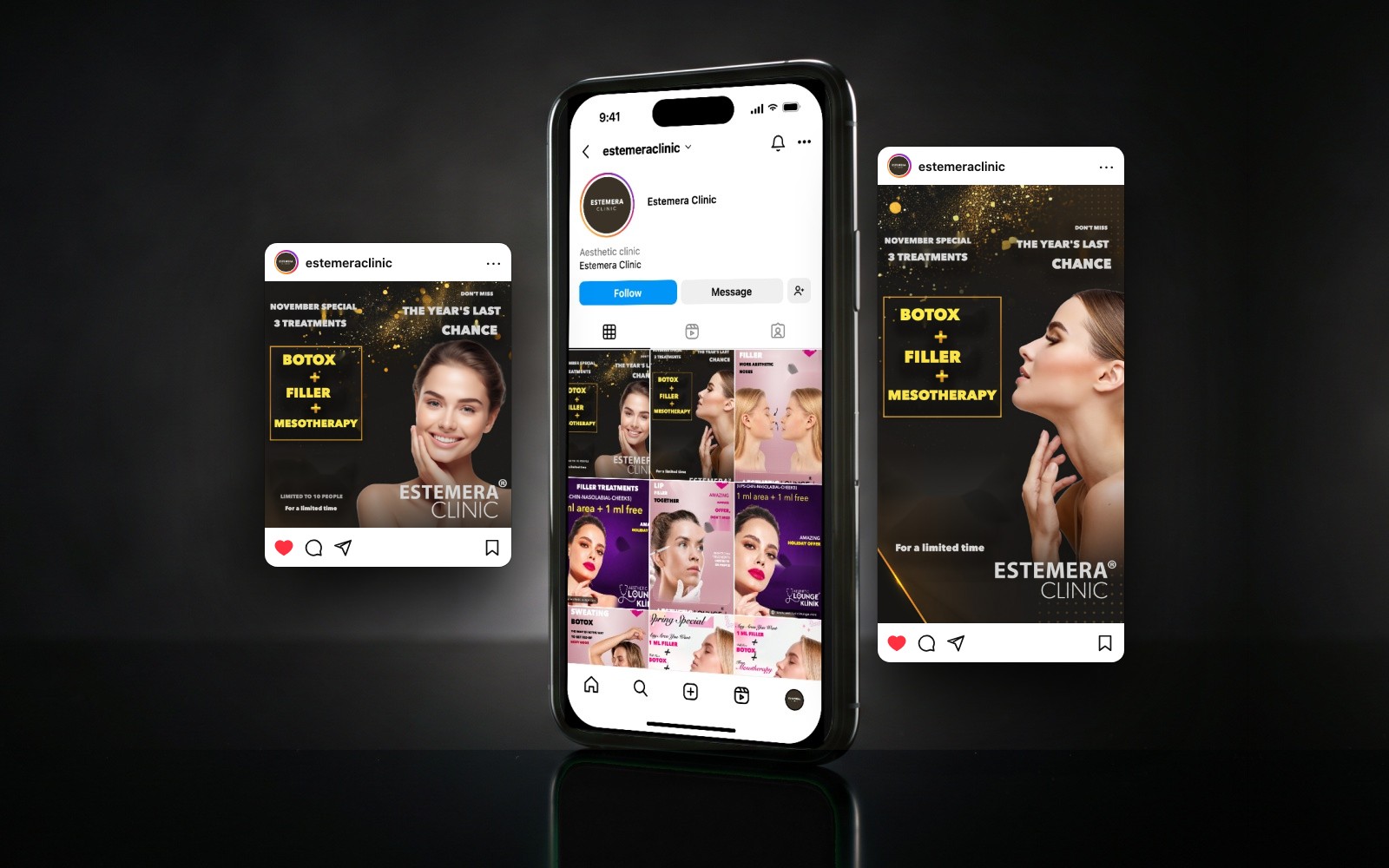

Instagram Account Management
Content · Design · Management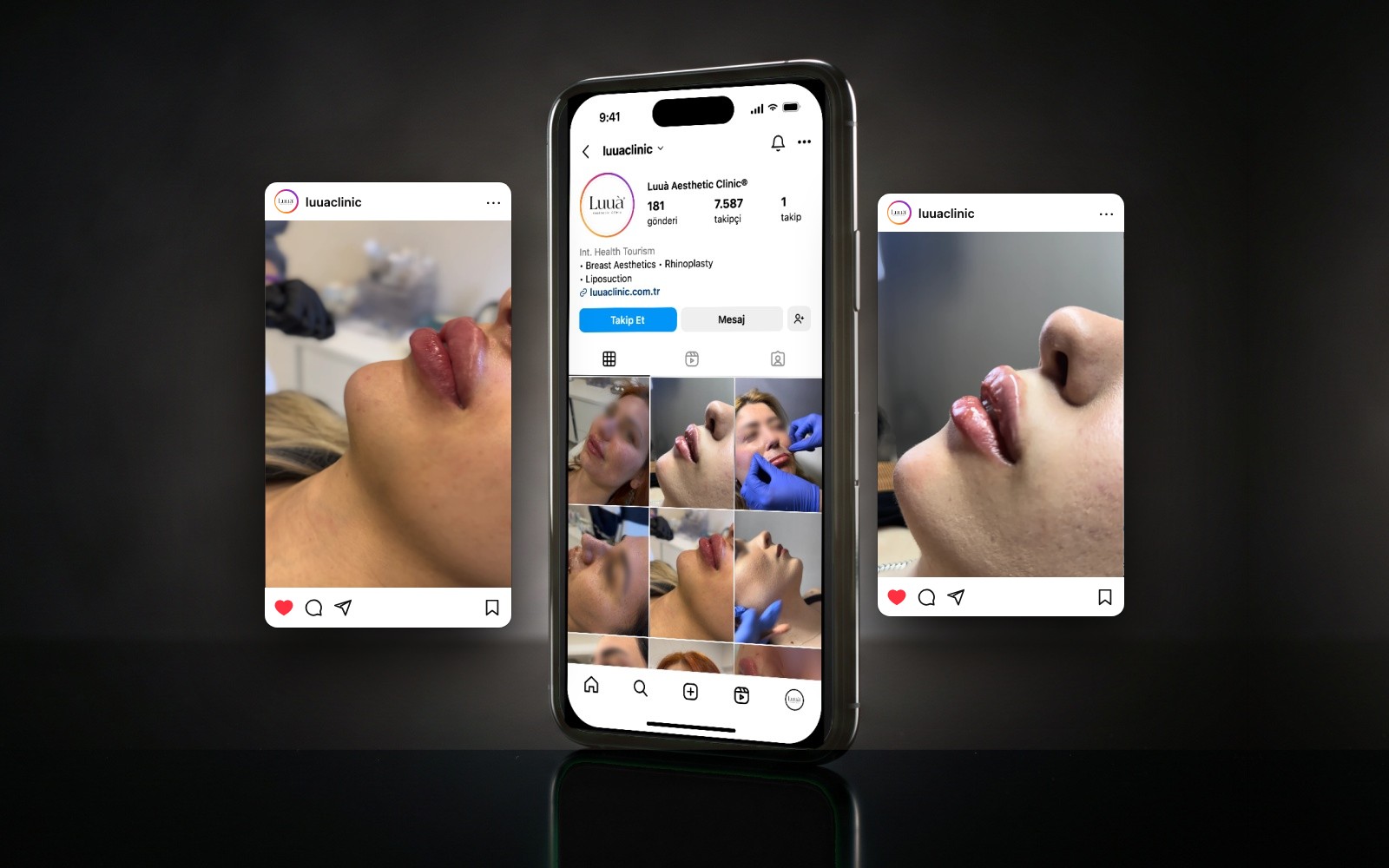
 CLINIC
Instagram Account Management
Content · Design · Management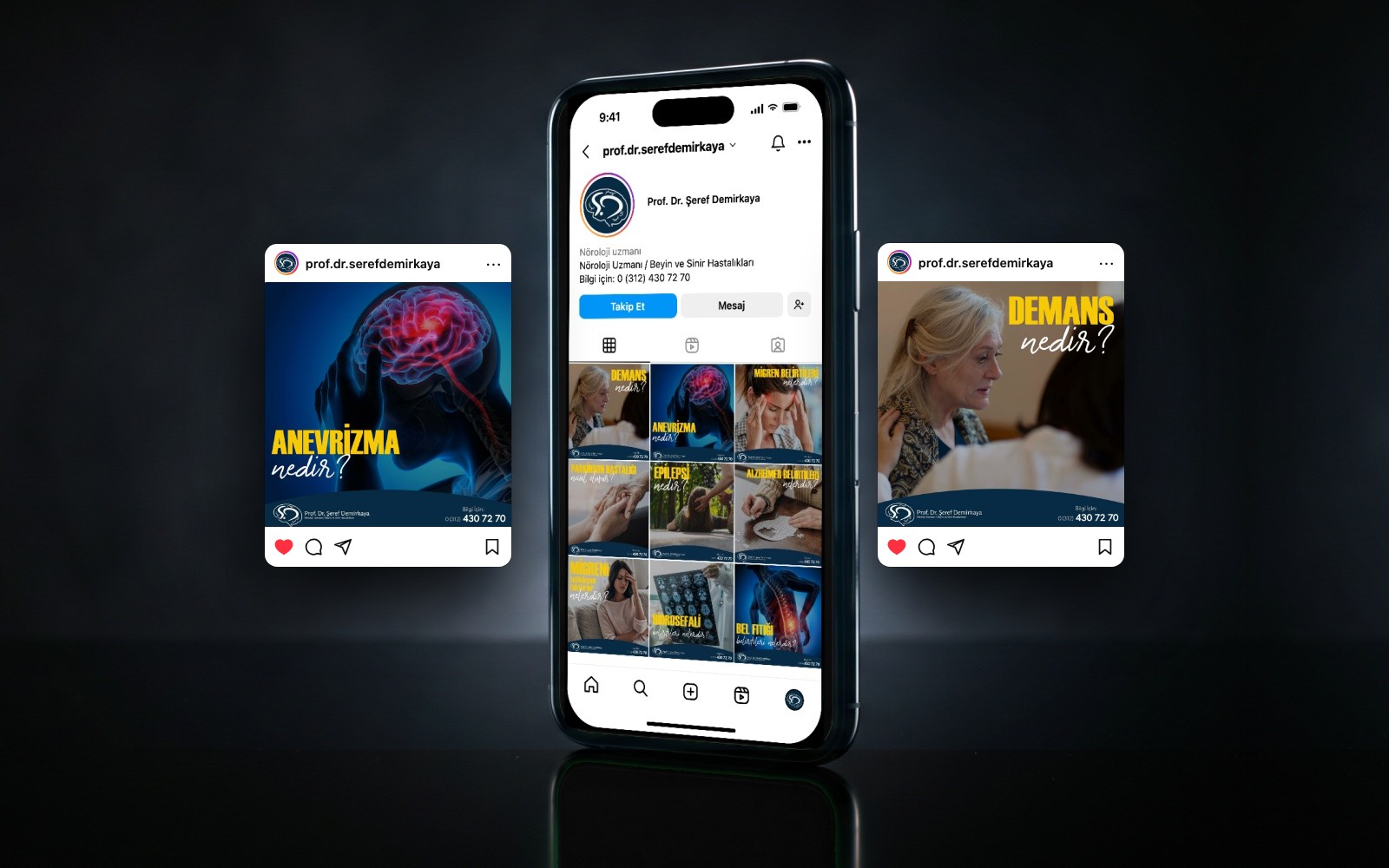

Instagram Account Management
Content · Design · Management
Social Media Specialist, Media Fish. Writes on our blog about social media management, digital advertising, branding and content production.