What Is Social Media Management? How It Works and What Drives Pricing
Social media management is the planned running of accounts through strategy, content, community, ads and reporting. A guide to process, roles, tools, pricing and choosing an agency.
 Sefa AşkınSocial Media Specialist16 min read
In Brief
Social media management is planning a brand’s social media accounts around its goals, producing and publishing content, managing the community, running ads when needed and measuring results. Strategy, content calendar, creative production, community management and reporting run together. Pricing depends on scope, such as the number of platforms, the amount of content, the type of production and ad management.
- Social media management is more than posting; it is a process made up of strategy, production, community, advertising and measurement.
- A content calendar and clear goals are the foundation of regular, consistent output; comment and message management are the foundation of trust and community.
- Price and scope should be evaluated together; the proposal should state the number of content pieces, the type of production, ad management and reporting explicitly.
Table of Contents
Opening a social media account is easy. But there is a big difference between having an account and managing it to serve a business goal. Irregular posts, unanswered messages, disconnected visuals and unmeasured results are problems accounts can run into. That’s why “what is social media management” and “how is social media management done” are questions businesses wonder about.
In this article we cover social media management step by step: its definition and scope, what a social media manager does, the process (strategy, content calendar, production, community management, advertising, reporting), platform selection, rules for corporate accounts, crisis management, tools, in-house and agency options, the logic of pricing and common mistakes. Because platform features and rules change often, check current information in the platforms’ official sources.
What is social media management?
Social media management is planning the social media accounts of a brand, organization or person around specific goals, producing and publishing content, handling communication with followers, running ads when needed and measuring results. In other words, it isn’t “posting a few things” but continuous, strategy-driven communication management.
For brands, social media is a promotion channel, a customer service line, a community space and a sales support tool all at once. So management isn’t just producing visuals and copy; it means knowing who the brand is, what it says to whom and what it expects from that communication. We covered social media’s place within marketing as a whole in our digital marketing guide; this article focuses more on the practical side of management.
Why is professional management necessary?
In Türkiye, internet use among people aged 16–74 reached 92.3% in 2026 (TurkStat, 2026); your customers may look for your brand online too.
- Consistency: Regular communication in a single voice builds trust and recognition for the brand.
- Goal orientation: Every post has a purpose; the account serves business goals (sales, appointments, awareness).
- Time and efficiency: Planned production reduces last-minute scrambling and low-quality content.
- Community and reputation: Fast, accurate answers to comments and messages protect customer satisfaction and reputation.
- Measurement and learning: Looking at the data shows what works, so the strategy can be improved.
- Risk management: Being prepared for negative comments and crises limits reputational damage.
What does a social media manager do?
The answer to the searches “social media manager,” “social media specialist” and “what does a social media manager do” is a task list that varies with the size of the account. In small businesses one person does it all; in large organizations different specialists form a team. The main tasks:
- Developing strategy: Setting goals, target audience, platform selection, content pillars and tone.
- Building the content calendar: Planning what will be shared, when and where.
- Producing content or managing production: Preparing visual, video, text and story content, or coordinating with designers and the shoot crew.
- Publishing: Posting content at the planned time with suitable captions and tags.
- Community management: Replying to comments, messages and tags; handling negative situations.
- Social media advertising: Setting up and optimizing ad campaigns and managing the budget.
- Collaborations: Managing partnerships with content creators and other brands.
- Tracking trends and competitors: Following platform developments and moves in the industry.
- Reporting: Measuring results, reporting them and offering suggestions for improvement.
A good social media manager combines writing, visual sense, communication, analytical thinking and platform knowledge. For anyone who wants to work in this field, practicing on a small account or on their own projects is the best way to learn.
The social media management process, step by step
1. Situation analysis and goals
The first step is understanding the current situation: What state are the accounts in, which content works, what are competitors doing, who is the target audience? Then measurable goals are set. Instead of “more followers,” write a clear goal such as “increase website visitors coming from social media by 30% in three months.” For target audience and competitor analysis, you can use our analysis guide.
2. Strategy and platform selection
You don’t have to be on every platform; it’s more efficient to be strong on a few platforms where your target audience is and where your content fits. A general framework: Instagram may suit visual products and lifestyle content, TikTok and Reels short and entertaining videos, YouTube long videos and education, LinkedIn professional and corporate communication, X fast-moving news and announcements, and Facebook community and local communication. Platform preferences vary by country, industry and age group; look at your own audience’s data. In Türkiye, the three most-used apps are WhatsApp at 90.0%, YouTube at 77.6% and Instagram at 71.1% (TurkStat, 2026).
A strategy document includes goals, target audience and personas, brand voice and tone, content pillars, posting frequency and calendar, formats to use, community management rules, advertising approach and measurement metrics. For the general marketing framework, see our marketing strategy guide.
3. Content pillars and brand voice
Structure your account around three or four content pillars; for example, educational content, product and service promotion, behind the scenes, customer stories and community content. The brand voice (formal or friendly, witty or serious) must be consistent. For the visual counterpart of brand voice, recall the principles of corporate identity.
How do you build a content calendar?
The content calendar is the backbone of management. On a weekly or monthly basis, it shows which content goes out on which platform on which day.
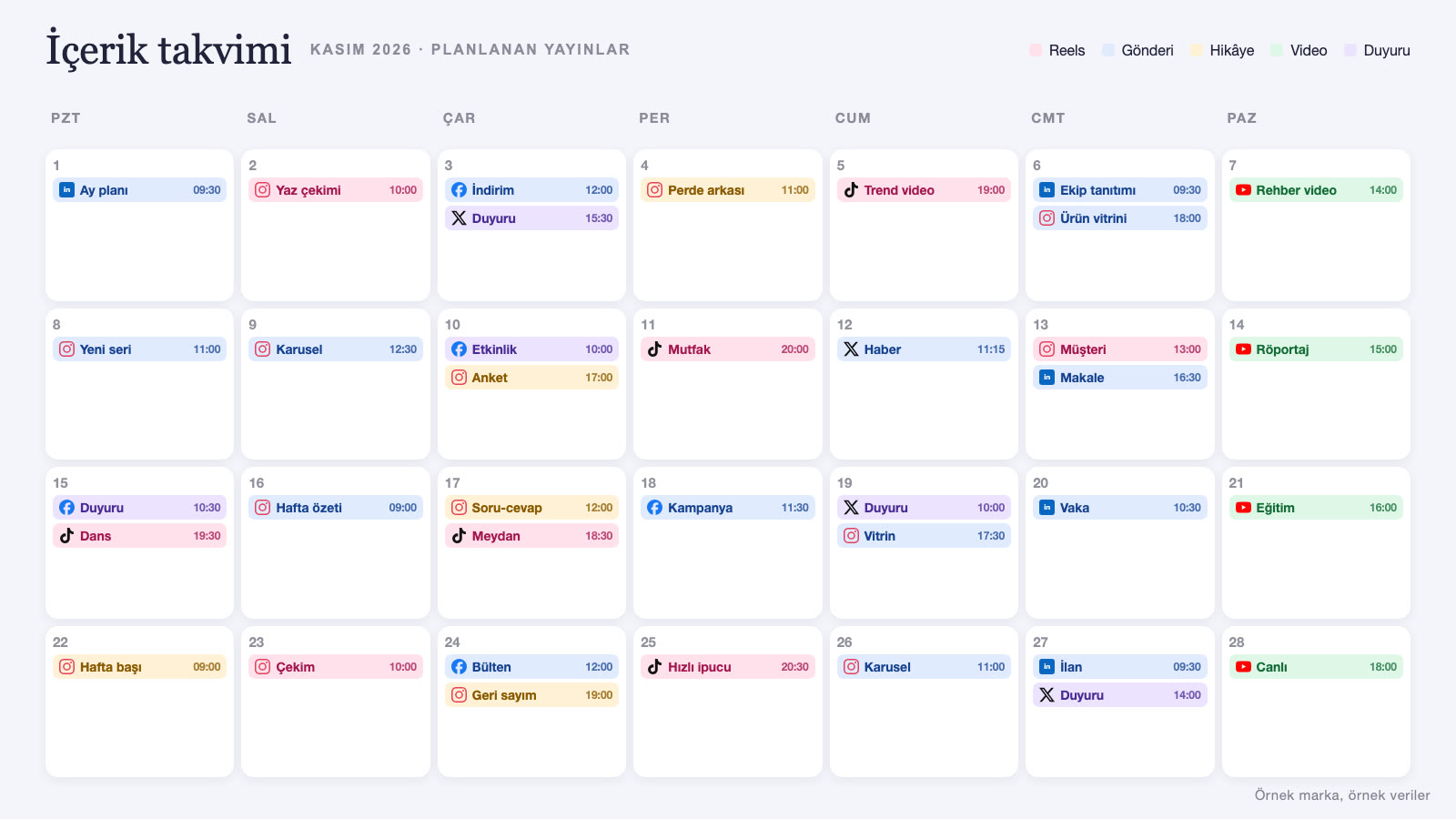
What should a calendar include?
- Publish date and time.
- Platform and format: Post, carousel, Reels, story, live stream, article.
- Topic and content pillar.
- Headline or main message and caption copy.
- Visual or video note: Direction for design or shooting.
- Call to action and link.
- Status: Idea, in progress, awaiting approval, approved, published.
- Person responsible.
Tips for building a calendar
- Mark special days and seasons: Holidays, commemorative days, sale periods, industry-specific events.
- Balance the content pillars: Instead of sales messages only, add informative, entertaining and community content too.
- Batch your production: Prepare and schedule a week’s or month’s content on the same days.
- Leave room for flexibility: Plan open slots for current events and timely opportunities.
- Plan the approval process: Add the time needed for client or management approval.
- Update the calendar based on results: Produce more of the content types that work well.
For a simple calendar, a spreadsheet app or planning tools are enough. What matters is that the calendar is actually used and kept up to date.
Content production
Content quality directly affects an account’s success. In production, pay attention to the following:
- Visual consistency: Color, typeface, layout and photo style should match the brand identity.
- Platform-appropriate format: Each platform has a different ideal size and length; mind vertical video and safe zones.
- Delivering value: Every piece of content should offer the viewer information, inspiration, entertainment or a solution.
- Originality: Relying too heavily on templates and stock images makes a brand look generic; real photos and video build trust.
- Copyright and permission: Check the usage rights of the images, music and typefaces you use; share images of customers and employees only with permission.
- Spelling and language: Incorrect characters and spelling mistakes damage trust; review before posting.
For short video content, you can check our Reels shooting guide; for product visuals, our product photography guide; and for an approach to growing an account, our Instagram growth guide. AI tools can help with idea generation and drafts, but brand consistency and accuracy must be ensured through human review (see AI content production).
Community management
Social media is a two-way communication space. Comments, messages and tags are where the real conversation between brand and customer happens. For community management:
- Respond fast: Reply to messages and comments as quickly as you can. Stating working hours and response times helps manage expectations.
- Be personal and warm: Instead of canned replies, write messages that address the question and speak to the person.
- Say thank you and make contributions visible: Thank people for positive comments; share customer content (with permission).
- Handle negative comments calmly: Show understanding of the problem, offer a solution and, if needed, move the conversation to a private message. Replying rather than deleting is often more reassuring; however, content that breaks the rules, such as insults, hate speech and spam, should be removed and reported.
- Set rules: Put the account’s usage and comment rules and the escalation paths (taking an issue to a higher level) in writing.
- Coordinate with customer service: Pass complaints and requests to the relevant team and see them through.
Crisis management
Every brand may at some point face a negative comment, a mistaken post or a growing complaint. To be prepared:
- Prepare a crisis plan: Decide in advance who makes decisions, who makes statements and what the approval paths are.
- Assess the situation quickly: Is it a real problem, a single complaint or misinformation?
- Pause scheduled posts: During a crisis, cheerful content scheduled earlier can look inappropriate.
- Communicate honestly, openly and briefly: Own the mistake, explain what’s being done and don’t be defensive.
- Follow the solution through to the outcome: When the problem is resolved, share that too.
- Learn: Afterward, examine the causes and improve the process.
Social media ads and growth
The share of people who bought goods or services online or placed orders was 60.0% in 2026 (TurkStat, 2026). Supporting well-performing content with ads is one way to extend reach. Advertising is used to reach new audiences, drive website traffic, collect leads, make sales and retarget. For ad setup, targeting and budget, see our Instagram advertising guide. Advertising should be planned together with organic content, not in place of it. For collaborating with content creators, see our influencer marketing guide.
Measurement and reporting
Management without measurement relies on guesswork. In reporting, evaluate platform data together with business goals.
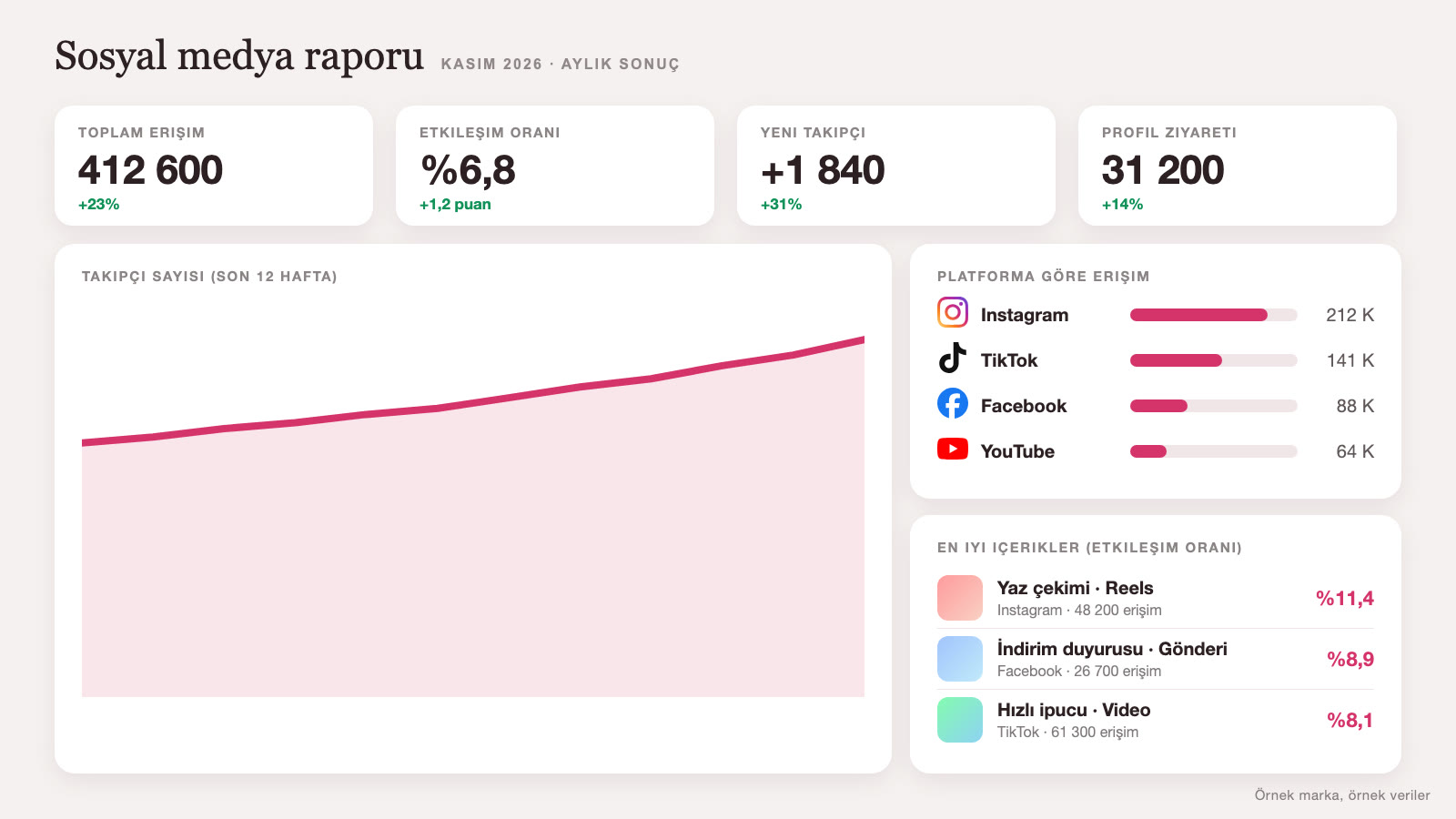
Metrics to track
- Reach and impressions: How many people the content reached; the split between followers and non-followers.
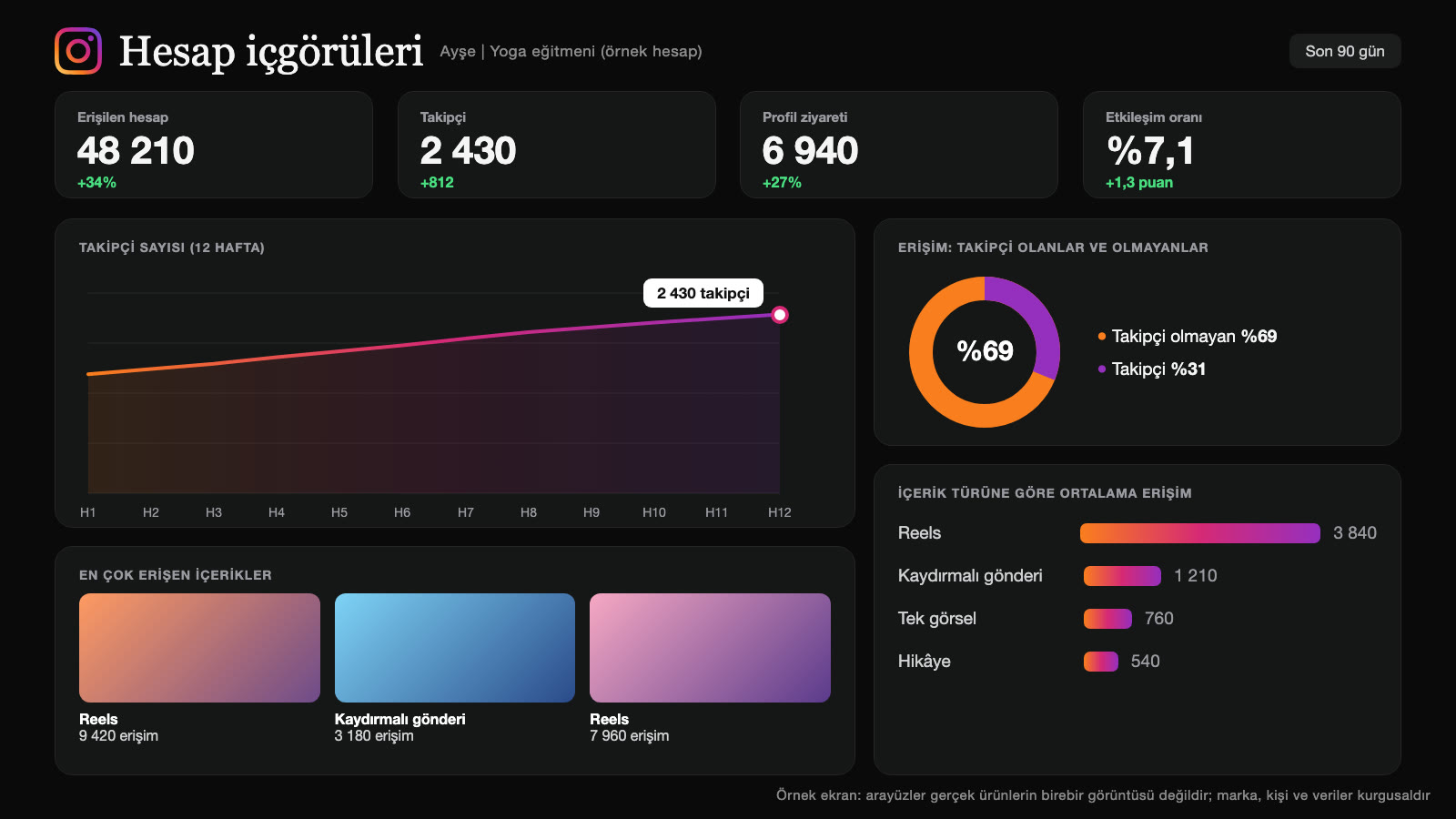
- Engagement: Likes, comments, saves, shares; engagement rate.
- Follower growth and audience makeup: Number of followers, age, location, active hours.
- Video metrics: View count, average watch time, completion rate.
- Traffic and conversion: Visitors coming from social media to the website and the actions they complete (forms, calls, purchases).
- Community metrics: Number of comments and messages, response time, sentiment (ratio of positive to negative).
- Ad metrics: Spend, cost per click, cost per conversion, return on ad spend.
Report format
Prepare the report in relation to goals: What was the goal for this period, and how much was achieved? Which content worked best and which fell short, and why? What will we change next period? A report shouldn’t be just numbers; it should include interpretation and recommendations. A possible rhythm is a detailed monthly report, a short weekly check and a quarterly strategic review.
Tools used
- Planning and scheduling tools: For the content calendar and scheduling posts across multiple platforms.
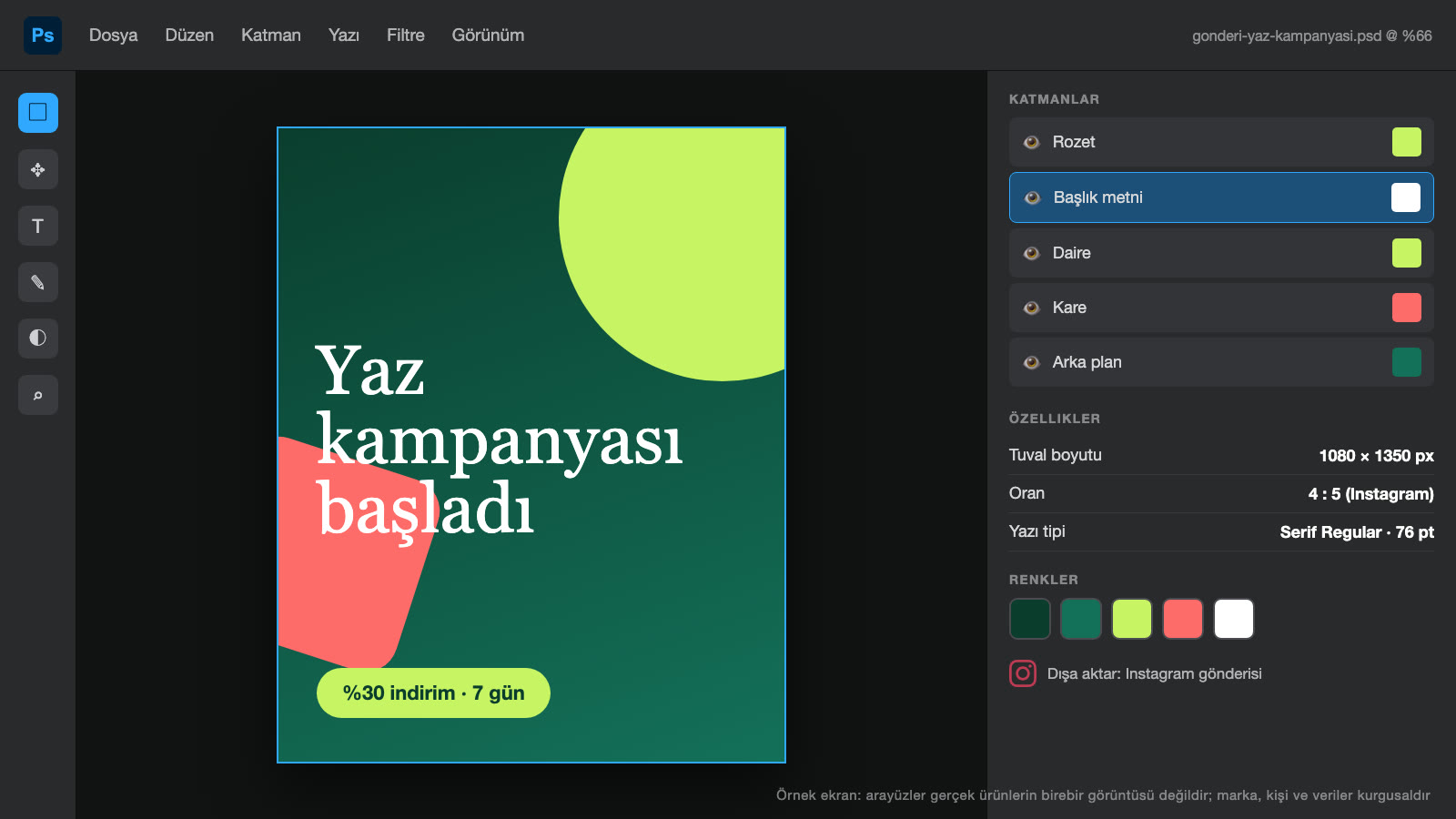
- Design and video tools: For editing visuals, carousels, covers and short videos.
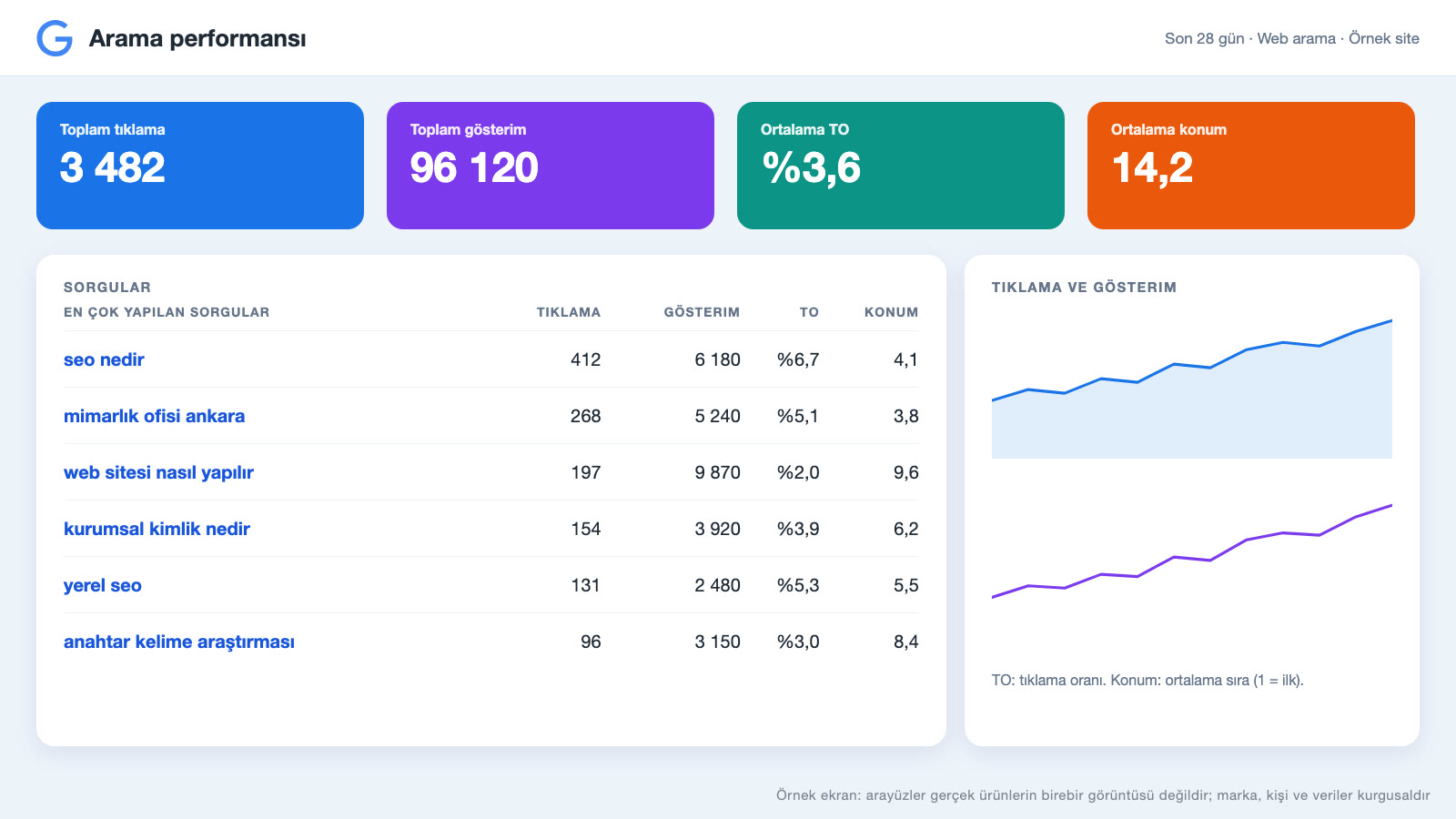
- Analytics tools: The platforms’ own insights and web analytics.
- Community management tools: For monitoring the comments and messages of multiple accounts in one place.
- Listening tools: For tracking how your brand name and industry topics are mentioned on social media.
- Collaboration and approval tools: For managing content approval workflows with the team and the client.
Keep the number of tools low. Tools exist to make the work easier; they aren’t management itself. To start, the platforms’ free features and a simple spreadsheet are enough for many businesses.
Rules and legal considerations for corporate accounts
- Account ownership and access: Make sure accounts are opened with the business’s own email and credentials; store passwords securely, turn on two-step verification and remove access for people who leave.
- Brand voice and usage guide: Put the tone, the phrases to use, the topics to avoid and the visual rules in writing.
- Personal data and consent: Customer and employee data and images must be used with consent and in line with personal data protection rules.
- Advertising and collaboration rules: Content that is advertising in nature must be clearly labeled; avoid exaggerated or misleading claims. Under a regulation amendment published in Türkiye’s Official Gazette (issue no. 33297, dated July 1, 2026) and effective August 1, 2026 (article 23/A), ads placed through social media influencers must now carry either the word “Advertisement” or “Promotion” (Official Gazette; Ministry of Trade).
- Copyright: Pay attention to the usage rights of music, images and text.
- Employees’ social media use: A short guideline on employees posting on behalf of the business and mentioning it can be useful.
The legal and regulatory framework changes over time; get legal advice in unclear situations.
In-house team, agency or freelancer?
- In-house team: High brand knowledge and fast day-to-day action, but bringing many skills, such as content production, design, video and advertising, into one team is costly.
- Freelancer: Flexible and economical for specific jobs; providing continuity and a coherent strategy is often hard.
- Social media agency: Delivers strategy, production, management and reporting with a team; offers an advantage in experience and capacity. The right choice and a clear scope are essential.
- Hybrid model: Strategy and quick day-to-day communication in-house, with design, video and advertising at the agency.
When choosing an agency, look at references, the team, reporting transparency and account ownership; for details, see our agency guide. For freelancers who want to offer “work-from-home social media management,” a clear service package, work samples and a contract structure are the first steps in building trust.
What determines social media management prices?
Searches such as “social media management prices,” “social media management package prices” and “Ankara social media management prices” are very common, but giving a single price would be misleading. When evaluating a service proposal, look at these line items:
- Number of platforms: How many accounts will be managed.
- Content volume and type: Monthly posts, carousels, Reels and stories; each takes different effort.
- Production method: Will it use ready-made templates, custom design, or shooting and video production? Photo and video shoots can be a separate line item.
- Strategy and reporting: Are strategy work, a monthly report and a meeting included?
- Community management: The scope and turnaround time for answering comments and messages.
- Ad management: Setting up and managing social media ads; the ad budget is a separate line item.
- Number of revisions and the approval process.
- Team and experience: Who will work on the account, and at what experience level.
- Industry and intensity: Effort rises in industries that need intensive, constant monitoring.
When comparing package prices, a single figure like “how many posts” isn’t enough; the quality of the content, the presence of a strategy, measurement and community management should be evaluated too. For very low-priced packages, ask whether they mean ready-made templates, no strategy and limited attention. Make sure the proposal states the scope, the deliverables, the reporting and the ad budget separately in writing.
Content approval process
Especially when working with an agency or a multi-person team, how content gets published should be settled from the start. A scattered approval process leads to delays and conflicting feedback. A simple, working setup might look like this: The content calendar is shared and approved at the start of the month; weekly designs and copy are sent for approval by a set date; the approver or approvers are named in advance and the feedback window (for example, one business day) is put in writing; and a fast-approval path is defined for urgent and news-driven posts. Approved content is scheduled, and changes are recorded. For content with legal or industry sensitivity (such as health, finance and law), the relevant expert’s approval should be part of the process.
Your first 30 days as a beginner
- Week 1, foundation: Write down the goals and target audience; fix up the accounts’ profile information and visuals; study competitors and similar accounts; set the content pillars.
- Week 2, preparation: Prepare the first monthly content calendar; produce the visuals and copy for the first 10 pieces of content; write the community management rules.
- Week 3, publishing: Start publishing regularly; reply quickly to comments and messages; try stories and interactive features.
- Week 4, measurement: Prepare the first report; review the best and weakest content; update the second month’s calendar based on the findings.
Instead of expecting perfect results in this period, focus on building a routine and learning. Creating a consistent account that delivers value, rather than becoming popular quickly, brings lasting results in the following months.
Common mistakes
- Posting without a strategy: Random content with no goal.
- Inconsistency: Weeks of silence followed by a flood of posts.
- Focusing only on sales: Constant promotion without giving value.
- Trying to be on every platform: Spreading resources thin and managing none of them well.
- Ignoring comments: Unanswered messages and complaints.
- Inconsistent brand language and visuals.
- Chasing trends blindly: Joining trends that don’t fit the brand.
- Not measuring: Continuing without knowing what works.
- Losing ownership: Opening accounts with the agency’s or an employee’s personal details.
- No crisis plan.
Example scenario: A dental clinic
A dental clinic in the city center uses its social media account only to post an occasional announcement. New patients mostly come by referral; the clinic wants to increase its online visibility and answer patients’ questions and concerns. Because health is a sensitive field, the clinic decides to work with an expert to make sure its content complies with the relevant regulations and professional rules.
Strategy: Goal: increase appointment requests and build trust within two months. Target audience: families aged 25–55 living around the clinic. Content pillars: (1) educational content (dental health tips, FAQs), (2) introducing the team and the clinic, (3) information that makes the patient experience easier (how a first appointment goes, hygiene), (4) announcements and opening hours.
Calendar and production: Two educational posts a week, one short video a week and regular stories are planned. Footage of the team and the setting shot at the clinic doesn’t include patients without their consent. The clinic manager approves content for scientific and legal accuracy.
Community management: Messages are answered quickly during business hours; requests for medical advice are redirected with “book an appointment and we’ll assess it at an exam”; personal health information is not shared in comments.
Measurement: The monthly report tracks reach, engagement, profile visits, clicks on the call and appointment links, and the source of incoming appointment requests. In the third month, the “frequently asked questions” series, which was saved the most, is expanded.
In this scenario, management comes together through a clear goal, the right content pillars, legal and ethical sensitivity, fast community communication and measurement.
Social media management checklist
- Have the accounts’ goals and target audience been written down?
- Were platforms chosen based on audience and resources?
- Have the brand voice, content pillars and visual rules been defined?
- Is the weekly or monthly content calendar ready and up to date?
- Are there resources, an owner and an approval process for content production?
- Have response times and rules for comments and messages been defined?
- Have a crisis plan and an escalation path been prepared?
- Have an advertising strategy and budget management been planned?
- Have KPIs, reporting frequency and the meeting schedule been defined?
- Have account ownership and access security (password, two-step verification) been checked?
- Have copyright, permissions and advertising rules been reviewed?
- If you work with an agency, are the scope, price and reporting in writing?
If you want your social media accounts managed with strategy, production, advertising and reporting together, take a look at our social media services.
Mini glossary: Social media management terms
- Content calendar: A plan of the content to be published, by date, platform and topic.
- Content pillar: A core topic group an account covers on a regular basis.
- Community management: Communication with followers through comments and messages.
- Engagement rate: The ratio of engagements to reach or followers.
- Reach: The number of unique people who saw the content.
- Impressions: The total number of times the content was viewed.
- Organic: Free visibility without ads.
- Escalation: Taking an issue to the appropriate higher level or person.
- Social listening: Monitoring conversations about the brand and topics on social media.
Frequently asked questions
What is social media management?
Social media management is managing a brand’s accounts in a planned way through strategy, a content calendar, production, community management, advertising and measurement. The goal is to turn social media into a channel that serves business goals.
How is social media management done?
First the goals and target audience are set, platforms and content pillars are chosen, a content calendar is prepared, content is produced and published, comments and messages are managed, ads are run if needed, and results are measured and reported on a regular basis.
What does a social media manager do?
The manager develops the strategy, builds the content calendar, produces content or manages production, publishes, answers comments and messages, manages ads, tracks competitors and trends, and reports results.
What determines social media management prices?
The number of platforms, monthly content volume and type, production method (template, custom design, shoot), strategy and reporting scope, community management, ad management, revisions and team experience determine the price. It’s important that the scope and line items are written in the proposal.
Should I hand social media management to an agency or do it myself?
If you have the time and experience, you can start on small accounts yourself. As the need for production, design, video, advertising and reporting grows, an agency or a hybrid model becomes more efficient. Whichever you choose, keep account ownership with the business.
How many platforms should I be on?
Being strong on a few platforms where your target audience is and where your content fits is better than being weak everywhere. Starting with one or two platforms and building regular production is a healthy approach.
Conclusion
Social media management is less about posting and more about a regular, measured process that ties a brand’s social media presence to a business goal. When a clear goal and strategy, a well-planned content calendar, content that delivers value and stays consistent with the brand, fast and warm community management, the right ad support, prepared crisis management and regular reporting come together, social media becomes both the brand’s voice and the most important bridge to customer trust. Whether you choose an in-house team, a freelancer or an agency, keeping ownership of the accounts and the direction of the strategy in your own hands is the basic condition of successful management.
This article was prepared with AI support. The images in the article are sample screens drawn with code; they don’t show a real client, person, place or data.
Related work
A few examples of Media Fish’s work on this topic:


Instagram Account Management
Content · Design · Management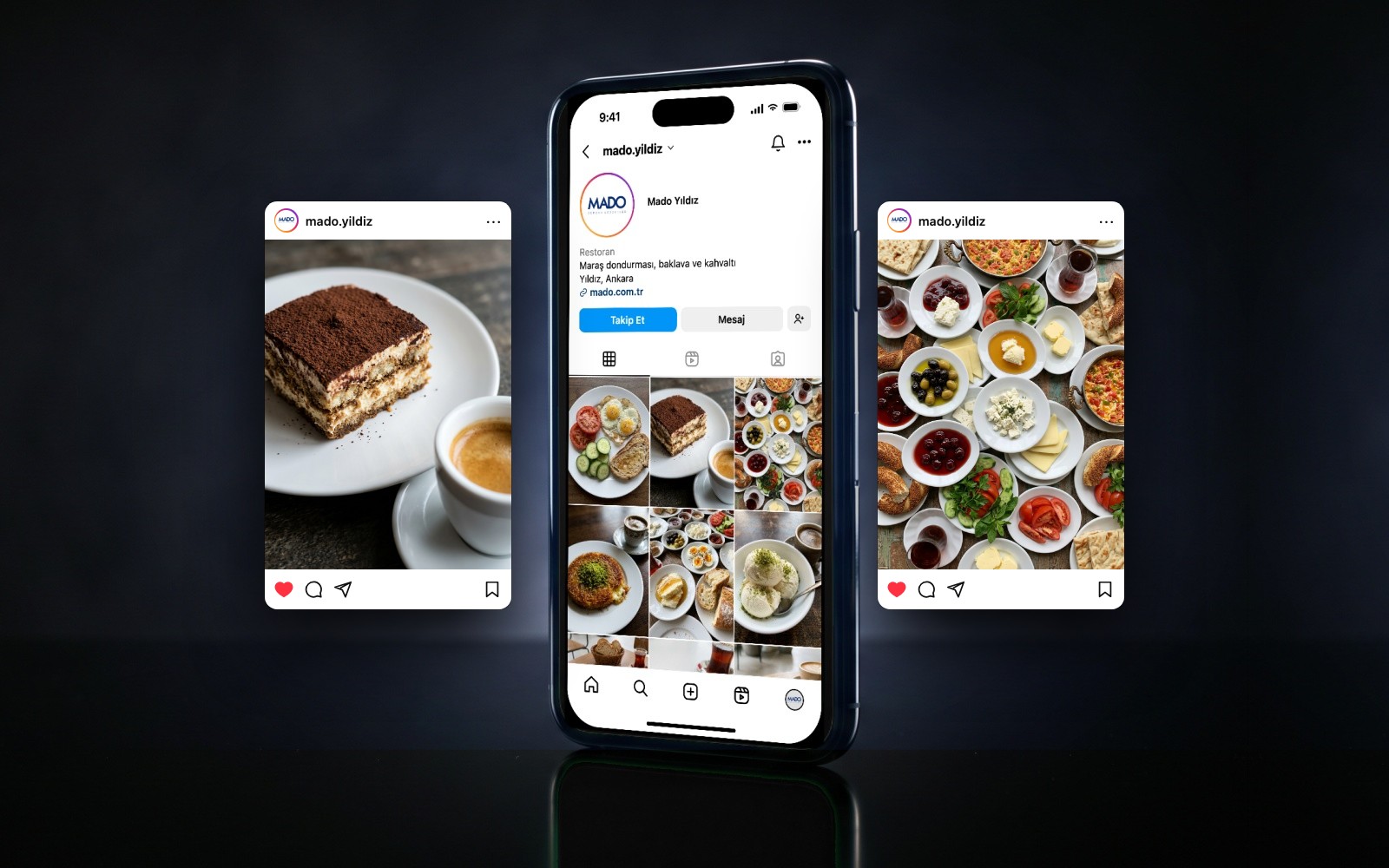

Instagram Account Management
Content · Design · Management

Instagram Account Management
Content · Design · Management
Social Media Specialist, Media Fish. Writes on our blog about social media management, digital advertising, branding and content production.