How to Build an E-Commerce Site: Setup, Costs and Legal Requirements
Building an e-commerce site means planning products and audience, platform, domain, payments, shipping, legal preparation and marketing together. A guide with cost items and a checklist.
 Melis Ay ÜreğenSoftware Engineer17 min read
In Brief
To set up an e-commerce website, you first pin down what you will sell, who you will sell to and your profit structure. Then you put the legal and tax groundwork in place, choose an infrastructure (a ready-made platform, open source or custom software), and set up the domain and security, product pages, payment and shipping integrations, invoicing, and a returns policy. After launch, you grow sales through SEO, advertising and customer service.
- Building the site is only part of the job; product, pricing, logistics, customer service and marketing have to be planned together.
- Choose your infrastructure based on your product count, budget and growth plan, and prepare for your legal obligations (distance sales, KVKK data protection, returns) from the start.
- Launching a site doesn’t guarantee sales; traffic, conversion and customer experience need to be measured and improved continuously.
Table of Contents
An entrepreneur or business owner might ask: “I want to sell my products online too; where do I start?” The answer is not just building a website. Selling online is a system in which product, pricing, stock, payment, shipping, legal compliance, customer service and marketing have to work together.
In this article we walk through how to set up an e-commerce site step by step: types of e-commerce, the difference between your own site and a marketplace, planning, legal preparation, infrastructure options, domain and security, product pages, payment and shipping, order management, cost items, SEO and marketing, customer experience, and common mistakes. The legal information here is general in nature; regulations change over time and differ by business type, so confirm the current rules with official sources and an accountant or legal counsel.
What is e-commerce?
E-commerce (electronic commerce) is the selling, buying and paying for products and services over the internet. In Türkiye, e-commerce volume grew 52.2% year over year in 2025 to reach 4.57 trillion TL (Turkish lira) (Ministry of Trade, E-Commerce in Türkiye 2025 Overview). It covers everything from a simple online store to large multi-vendor marketplaces. The core building blocks of e-commerce are a product catalog, a cart and checkout flow, order and stock management, shipping and delivery, invoicing, customer accounts, and customer service.
E-commerce is not just a technology business. Even the best infrastructure will not succeed with the wrong product, weak pricing or slow delivery. That is why you need to nail down the business model before you start building. For the wider picture, see our digital marketing guide as well.
Types of e-commerce
- B2C (business to consumer): The business sells to individual customers.
- B2B (business to business): Wholesale or corporate procurement; it usually involves special pricing, credit limits and large orders.
- C2C (consumer to consumer): Individuals selling second-hand or handmade products to each other; this can also happen on marketplace platforms.
- D2C (direct to consumer): The manufacturer sells directly to the customer without an intermediary, which brings brand control and a margin advantage.
- Subscriptions and digital products: Models such as recurring delivery boxes, courses, software or file sales.
Your own site or a marketplace?
There are two main ways to start selling online, and you can use both together. In 2025, 634,611 businesses engaged in e-commerce (Ministry of Trade, E-Commerce in Türkiye 2025 Overview); 79.2% of businesses selling on marketplaces (excluding the food sector) operate on a single marketplace (Ministry of Trade, E-Commerce in Türkiye 2025 Overview).
| Feature | Marketplace | Your own e-commerce site |
|---|---|---|
| Speed of getting started | Fast; ready-made traffic and infrastructure | Requires setup and content preparation |
| Traffic | The platform’s ready-made audience | You earn the traffic (SEO, ads, social media) |
| Competition | Many competitors on the same page; price pressure | Only your products stand out |
| Commission and rules | Commission, platform rules and rule changes apply | You set the rules; there is a payment provider cost |
| Brand and customer data | The customer belongs to the platform; limited brand control | You own the brand experience and customer relationship |
| Long-term value | Risk of platform dependence | You build your own asset |
A practical approach: If you are just starting out, use marketplace sales to test product demand and operations; in parallel, set up your own site and grow your brand and customer relationships. That way you get both fast sales and long-term independence.
Planning before you build the site
What will you sell?
Choosing the product is the foundation of success. Answer these questions: Is there demand for this product? Who are the competitors and how do they sell? Where will I source the product and at what cost? Is the profit margin still meaningful after commission, shipping, returns and advertising costs? Is the product small, light and unbreakable, or are its logistics difficult? To understand demand, look at search suggestions, trend tools, marketplace sales data and competitor reviews. For a detailed method, read our article on target audience and competitor analysis.
Who will you sell to?
Define your product’s target audience: Who buys it, what problem does it solve and which channels do they shop through? The target audience shapes your site design, product descriptions, payment options and marketing channels.
Pricing and profit calculation
Calculate your unit economics from the start: product cost, packaging, shipping, payment provider commission, tax, the rate of returns and exchanges, marketing cost, and operating expenses. If the sale price doesn’t cover these items and leave a reasonable profit, losses grow as sales volume grows. Consider your pricing decision alongside the 4Ps section of our marketing strategy guide.
Brand and positioning
Hundreds of sites may sell the same product; why should a customer choose you? Your brand name, logo, visual language and promise need to be clear. Our guide to building and registering a brand can help at this stage.
Legal and financial preparation
In Türkiye, e-commerce is an activity subject to the relevant legislation. The headings below show the general framework; the details vary and are updated depending on business type and sales volume.
- Business type and tax registration: You decide among options such as a sole proprietorship, a limited company or a joint-stock company based on the scope of the commercial activity and your goals. Consulting an accountant on this is the safe route. Small-scale and individual sales may have separate rules and exemptions; check official sources for the current rules.
- Distance sales contract and pre-contract information: In online sales to consumers, information such as seller details, product features, total price, payment and delivery terms, and the right of withdrawal must be presented clearly before the order.
- Withdrawal and return terms: A consumer may withdraw from the contract within 14 days without giving a reason and without paying a penalty; for goods, the period starts on the day the goods are received (Distance Contracts Regulation, Article 9). Exceptions are also defined in the regulation. Publish your return policy clearly on the site.
- Personal data protection (KVKK): If you collect customer data, you must provide a privacy notice when the data is obtained (KVKK Art. 10; KVKK is the Turkish Personal Data Protection Law). For advertising, marketing and performance cookies that are not essential for the site to work, explicit consent is also required; the Personal Data Protection Board expects cookie notices and explicit consent texts to be provided.
- Commercial electronic messages: Consent and opt-out rules apply to email and SMS marketing.
- E-commerce registration and notification obligations: A business that will sell through its own site must register with the Electronic Commerce Information System (ETBİS) before starting operations; registration is free. Sellers who sell only through domestic marketplaces are not subject to this obligation; a domestic seller selling through a marketplace abroad must register (Ministry of Trade). For other obligations tied to transaction volume, check the current legislation.
- Invoicing: Work out with your accountant whether systems such as e-Fatura (electronic invoice) or e-Archive (archive invoice) are mandatory for you.
- Product-specific rules: In sectors such as food, cosmetics, electronics, textiles and children’s products, labeling, documentation, certification and safety rules also apply.
Having a specialist prepare or review your legal texts (distance sales contract, privacy policy, return terms, cookie policy) reduces problems later. Copying ready-made templates without adapting them to your business is risky.
Infrastructure options
There are several ways to set up an e-commerce site; the choice depends on product count, budget, technical knowledge and growth goals.
Ready-made (hosted) e-commerce platforms
These are platforms used on a monthly or annual subscription, with a low setup and maintenance burden. You pick a theme, upload products, and turn on payment and shipping integrations. The advantages are a fast start and the platform handling security and updates; the drawbacks are limited customization and subscription cost. They suit small and mid-sized businesses and beginners.
Open-source solutions
These are set up by adding an e-commerce plugin to an existing website infrastructure or with open-source e-commerce software. Flexibility is high and licensing cost is low; however, hosting, security, updates and performance management are your responsibility. They require technical knowledge or developer support.
Custom software
If the business has special processes, high volume or complex integrations, software can be developed from scratch. It is the most flexible and the most expensive method; it requires a development and maintenance team. Assess carefully whether you need it at the start.
Selection criteria
- Number of products and variations: A large number of products and options calls for strong catalog management.
- Payment and shipping integrations: Is it compatible with the payment provider, shipping companies and accounting software you want to use?
- Turkish and local requirements: Turkish interface, Turkish lira, and support for local invoicing and legal texts.
- SEO and speed: Options for editing page URLs, titles, descriptions and structured data; site speed.
- Scalability: Will the system keep up when you grow, and is migrating easy?
- Cost: The total of setup, subscription, plugin, commission and maintenance costs.
- Support: Turkish-language support and community resources.
Domain, hosting and security
If you are building your own site, you need to make these basic decisions:
- Domain: Choose an easy-to-type, memorable domain that matches your brand name. If possible, check both the national and international extensions of your brand name. Register domain ownership in the business’s name and with the business’s email address.
- Hosting: Hosting is included on ready-made platforms. For your own setup, choose hosting that is fast, reliable and offers sufficient resources; resource needs grow as visitors and products increase.
- SSL (HTTPS): All pages where payment and personal information are entered must load over a secure connection.
- Security: You need strong passwords, two-step verification, regular backups, up-to-date software, limits on admin access and monitoring of suspicious logins.
- Card data security: Don’t store card data on your own server; redirect the payment page to a secure payment provider and comply with the applicable security standards.
Design and user experience
In e-commerce, design is less about looking good and more about making buying easy. Customers should find what they are looking for quickly, trust the product and complete payment without trouble.
- Home page: Explain at first glance what you sell and why customers should choose you; give easy access to featured products and categories.
- Category structure and search: Clear categories, filters and strong on-site search become critical as the product count grows.
- Mobile compatibility: The mobile experience should be designed as a priority too.
- Speed: Fast page loads are part of the user experience.
- Trust elements: Contact details, return and delivery policies, secure payment badges, customer reviews.
- Consistent visual language: Color, typeface and photo style should match the brand identity.
For general site design principles, see our corporate website guide; for user experience details, see our UI/UX guide.
How to prepare a product page
The product page is where the sale happens. It should answer the customer’s questions, build trust and make buying easy.

- Images: Sharp, well-lit photos taken from different angles; images that show the product’s size and usage setting; a short video if possible. For shooting methods, see our product photography guide.
- Title: A searchable phrase that describes the product clearly: brand, model, type and key feature.
- Description: Alongside features, explain the benefit the customer will gain; give complete information such as dimensions, material, care and warranty. Write original copy instead of using duplicate content.
- Price and stock: The price and whether tax is included should be clearly stated; stock status and delivery time should be visible.
- Variations: Options such as color, size and volume should be easy to select.
- Reviews and questions: Customer reviews and frequently asked questions increase trust.
- Clear buy button: The “Add to cart” button should be prominent and stay in a fixed spot on the page.
- Delivery and return information: The information the customer needs at the moment of decision should be summarized on the page.
Under Article 28/B as amended by the Regulation Amending the Regulation on Commercial Advertising and Unfair Commercial Practices (Official Gazette, July 1, 2026, no. 33297; in force August 1, 2026), if sellers and providers online, or intermediary service providers that facilitate distance contracts on their behalf, let consumers review a good, a service or the seller, reviews may be submitted only by those who purchased the relevant good or service. Consumer reviews obtained from channels where purchase verification is not possible cannot be published. If you add a product review section to your site, you need to set it up so that only customers who bought the product can write a review. For the exact text, see the Official Gazette page at the link.
Payment systems
Letting customers pay safely and easily is a critical part of conversion. Online payments usually run through a licensed payment provider or a bank’s virtual POS solution. In 2025, 62.5% of e-commerce volume was paid by card, 29.2% by bank transfer (havale/EFT) and 3.5% by cash on delivery (Ministry of Trade, E-Commerce in Türkiye 2025 Overview). When deciding, look at the following:
- Accepted methods: Credit and debit cards, installment options, bank transfer (havale/EFT), cash on delivery, wallet solutions.
- Commission and fees: Per-transaction commission, installment costs, fixed monthly fees and money transfer times.
- Security: Secure payment authentication standards and fraud prevention mechanisms.
- Infrastructure compatibility: Is there a ready-made integration with the e-commerce platform you chose?
- Contract and approval process: Application documents and review time.
If customers struggle on the payment page, they abandon the cart. Offering guest checkout instead of mandatory registration, cutting unnecessary form fields, showing the total (including shipping and tax) before payment and making secure payment badges visible are simple steps that streamline checkout.
Shipping and logistics
The delivery experience directly affects customer satisfaction and repeat purchases. For goods, the delivery time for an order is at most 30 days, except for goods prepared to the consumer’s specifications (Law No. 6502, Article 48). Returns also need to be factored in: The sector with the highest cancellation and return rate is clothing, shoes and accessories at 21.6% (Ministry of Trade, E-Commerce in Türkiye 2025 Overview). When planning shipping:
- Consider working with more than one shipping option and comparing price and service quality; keep a backup carrier for peak periods.
- Include the shipping fee (free-shipping threshold, flat fee or by region) in your profit calculation.
- Set up suitable packaging materials and a process for packing products safely; it reduces damage and return costs.
- Give the customer shipment tracking information and an estimated delivery time.
- Keep the return and exchange process easy and clear; state plainly who pays for return shipping.
- For stocking, assess models such as a warehouse, stock on hand or shipping directly from the supplier (dropshipping) against your own business structure; with dropshipping, your control over stock, quality and the delivery process may be limited.
Order, stock and invoice management
As sales grow, manual tracking gets harder. To keep your order, stock and invoice processes in order:
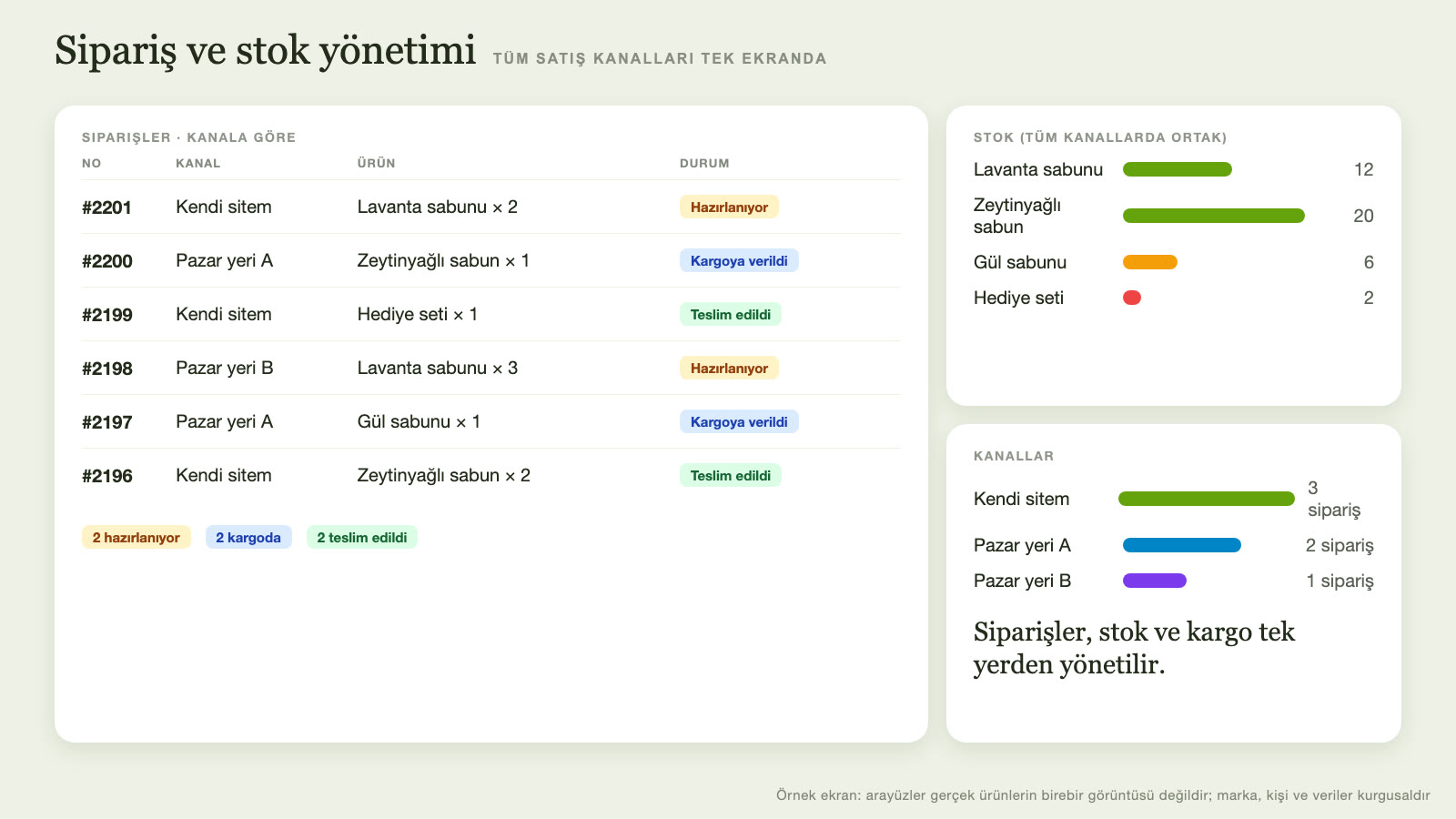
- Keep stock current: Selling an out-of-stock product creates dissatisfied customers. If you sell on more than one channel (your own site and a marketplace), it is important to update stock from a single hub.
- Manage orders from one screen: Order status, shipping and invoice information should be trackable from a single panel.
- Integrate accounting and invoicing: Automatic invoicing of orders and transfer to the accounting software saves time.
- Customer updates: Send automatic emails or messages such as order confirmation, shipped and delivered.
- Reporting: Regularly track data such as best-selling products, return rate, average order value and revenue per customer.
With marketplace integrations, product and stock information has to be kept equally current on every channel; otherwise stock errors and cancellations rise. Integration tools can be considered for multi-channel management.
What does the cost of an e-commerce site include?
Giving a single figure for “the cost of setting up an e-commerce site” would be misleading. Cost varies across a wide range depending on the chosen infrastructure, design level, product count and service scope. When planning your budget, keep these items in mind:
- Setup and legal expenses: Company or business formation, an accountant and preparation of legal texts.
- Platform and infrastructure: Subscription or software license, hosting, domain, SSL.
- Design and setup: Theme, customization, mobile compatibility, product uploads, integrations.
- Product photography and content: Shooting, editing, copywriting.
- Payment provider costs: Transaction commissions and possible fixed fees.
- Stock and packaging: Product sourcing, storage, packaging materials.
- Shipping and return costs.
- Marketing: Ad budget, content production, SEO and social media.
- Maintenance and support: Updates, security, technical support and development.
- Staff and customer service.
As for the question “Is setting up an e-commerce site free?”: Some platforms offer a free trial or low-cost starter options, but product, logistics, payment commission and marketing costs exist in every case. Starting with a small product range and a low-risk setup, then increasing the investment as sales grow, is a safe approach. We cover the factors that determine website cost separately in our web design pricing article.
SEO and marketing
Putting the site live doesn’t guarantee customers will come. Several channels are used together for traffic:
- SEO: Preparing product and category pages with original titles, descriptions and content; a fast, mobile-friendly site; blog and guide content. See our SEO guide for details.
- Search ads and shopping ads: A fast way to reach customers who are searching for a product; covered in our Google Ads guide.
- Social media ads: To present the product visually and find new customers; our Instagram advertising guide may help.
- Email and message marketing: Abandoned cart reminders, new product announcements, campaigns and loyalty offers; these must follow the consent rules.
- Collaborations: Working with suitable content creators; covered in our influencer marketing guide.
For the general approach, take a look at our digital marketing guide. In marketing, focus not only on winning new customers but also on getting existing customers to buy again.
Customer service and reputation
In online shopping the customer doesn’t see you; you build trust through the quality of your communication. Answer order questions quickly, show your contact channels (phone, email, messaging) clearly, publish frequently asked questions on the site and resolve complaints. Collect and respond to customer reviews; reviews affect both new customers’ decisions and search engine visibility.
Common mistakes
- Choosing a product without researching demand: Stocking up heavily without being sure it will sell.
- Incomplete profit calculation: Not accounting for commission, shipping, returns and advertising costs.
- Skipping the legal texts: Leaving the distance sales contract, return terms and privacy policy incomplete.
- Weak product photos and descriptions: Making it hard for the customer to understand the product.
- A complicated checkout flow: Mandatory registration, multi-step forms and hidden costs.
- Neglecting mobile.
- Leaving stock and shipping management disorganized: Products sold but out of stock, late deliveries.
- Launching the site without a traffic plan: The assumption that “the site is open, so customers will come.”
- Not measuring: Not tracking conversion rate, cart abandonment rate and average order value.
- Thinking about security late: A store with no backups, outdated software and weak passwords.
Sample scenario: A handmade natural soap brand
An entrepreneur who makes natural soap at home on a small scale promotes the products on social media and takes orders by message. As demand grows, the entrepreneur decides to set up an e-commerce site.
Planning: Product cost, packaging and shipping are calculated; gift sets and a subscription idea are considered. Target audience: people interested in natural products and gift buyers. The brand name and logo are researched for registration.
Legal and financial preparation: The business type is decided with an accountant; the distance sales contract, return terms and privacy policy are prepared; the products’ ingredient and labeling requirements are checked against the relevant legislation.
Setup: For a quick start, a ready-made e-commerce platform is chosen. A domain is bought, the theme is adapted to the brand and product photos are shot. A payment provider and a shipping company are integrated. Product pages get ingredient, usage and skin-type information and a review area.
Growth: An announcement goes out to existing followers on the social media account; the first customers are asked for reviews; an automatic reminder email is set up for abandoned carts; small-budget ad tests are run. In the third month, gift sets and a subscription option are added.
Measurement: Monthly visitors, conversion rate, average order value and return rate are tracked. The data shows which product and which channel bring more value, and the budget is shifted accordingly.
In this fictional example, what drives success is not just “opening a site” but product economics, legal compliance, trust-building product pages, regular customer communication and growth managed with data.
E-commerce site setup checklist
- Have you worked out the product’s demand, competitors and profit structure?
- Are the target audience and brand position clear?
- Have you settled the business type, tax and invoicing setup with an accountant?
- Are the distance sales contract, return terms, and privacy and cookie texts prepared?
- Have you chosen the infrastructure (ready-made platform, open source or custom)?
- Are the domain, hosting and SSL done?
- Are product photos, descriptions, prices and stock information complete?
- Have the payment provider and payment methods been tested?
- Are the shipping agreements, fee policy and packaging process ready?
- Have you planned the order, stock and invoice process?
- Have mobile and speed tests been done?
- Are SEO basics (title, description, sitemap) and measurement tools set up?
- Are the marketing plan and first traffic sources defined?
- Are customer service channels and response processes ready?
- Are backup and security measures in place?
If you want to plan your e-commerce site together with design, setup, product photography and marketing, take a look at our web and software services.
Mini glossary: E-commerce terms
- B2C, B2B: Business-to-consumer and business-to-business sales models.
- Marketplace: An online platform where multiple sellers sell their products.
- Virtual POS: The infrastructure that accepts online card payments.
- Conversion rate: The percentage of site visitors who make a purchase.
- Cart abandonment rate: The share of people who add products to the cart and leave without buying.
- Average order value: The average spend per order.
- Distance sales: A sale made remotely, where the parties are not physically together.
- Right of withdrawal: The consumer’s right to back out of a contract under certain conditions.
- Dropshipping: The seller holds no stock; the order is shipped straight from the supplier to the customer.
- SKU: A unique code assigned to each product variant for stock tracking.
Frequently asked questions
How do you set up an e-commerce site?
First you plan the product, target audience and profit structure; then you do the legal and financial preparation, choose the infrastructure, set up the domain and security, prepare product pages, integrate payment and shipping, and launch the site. After launch, you grow sales with SEO, advertising and customer service.
What do you need to set up an e-commerce site?
You need a product or service to sell, a business and tax setup, legal texts, an e-commerce infrastructure, a domain, a payment solution, a shipping agreement, product photos and content, stock and order management, and a marketing plan.
How much does it cost to set up an e-commerce site?
There is no fixed amount. The infrastructure, design level, product count, payment commissions, shipping, stock and marketing expenses determine the cost. It is safe to start low-risk with a small product range and increase the investment as you grow.
Should I choose a marketplace or my own site?
A marketplace suits a fast start; your own site suits growing your brand and customer relationships. You can also use both: Test demand on a marketplace while building long-term value on your own site.
What legal texts does e-commerce require?
In general you need a distance sales contract and pre-contract information, return and withdrawal terms, a privacy policy and a personal data protection notice, a cookie policy, and, where needed, consent texts for commercial electronic messages. Get support from legal counsel for the current requirements.
Will sales come once I open an e-commerce site?
No. Winning traffic and driving conversion take marketing work such as SEO, advertising, social media and email. Product photos, trust elements and customer service also directly affect sales.
Conclusion
Setting up an e-commerce site is not just building a website; it is building an online business. The right product and target audience, a sound profit calculation, legal and financial preparation, an infrastructure that fits the business, trust-building product pages, easy payment and reliable delivery, orderly stock and order management, and continuously measured marketing build a sustainable store when they work together. Start small, learn, measure and grow what works; the most valuable assets in e-commerce are a brand that earns trust over time and loyal customers.
This article was prepared with AI support. The images in the article are sample screens drawn with code; they don’t show a real client, person, place or data.
Related work
A few examples of Media Fish’s work on this topic:


E-Commerce Site + SEO + SEM
Design · Software · Publishing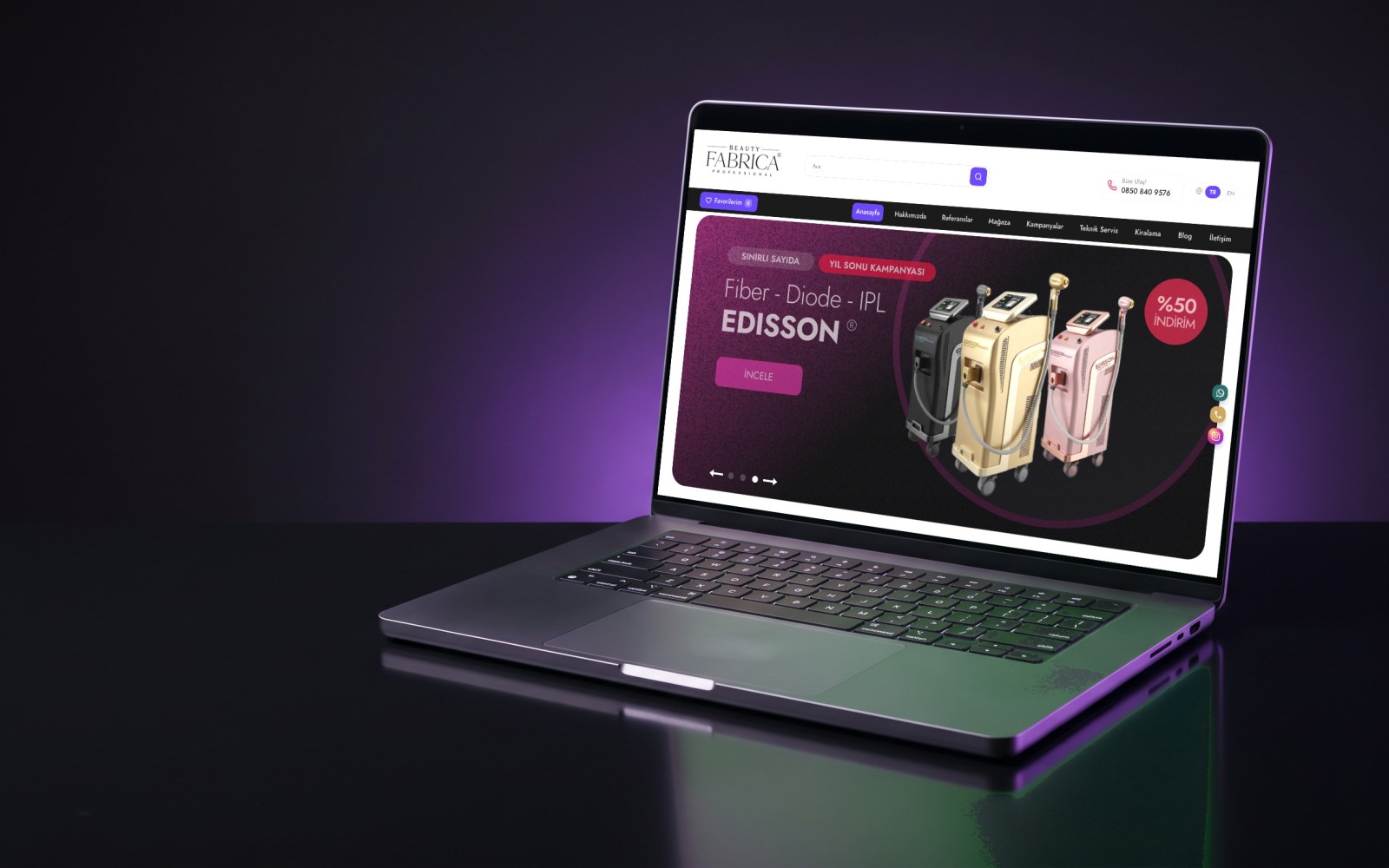

E-Commerce Site + SEO + GEO
Design · Software · Publishing

Corporate Website + SEO
Design · Software · Publishing
Software Engineer, Media Fish. Writes on our blog about web and software, mobile apps, artificial intelligence and search engine optimization (SEO).